


Of course sexual ratios, and/or genetic predisposition to grow slow are major factors, but there are many other environmental issues that come into play.
More aggressive tanks mates hogging the food (or wrong type food), overcrowding, too few water changes creating high nitrates, temps not optimum range for the species.
There are also seasonal changes in tropical areas that can influence growth spurts, or slow downs. Cool waters from snow melts in the Andes may trigger certain actions, food supplies or breeding activity in species like festae, Green Terrors or ornatum (close cousins to festae).

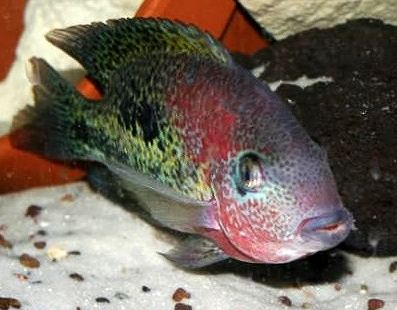
I had half dozen Paraneetroplus bifasciatus in a 100 gal tank from the same spawn, 5 females grew to 6" in 6 months while 1 (the male) remained 2". After I put him alone in his own 20 gal (in line with the other tanks)he quickly outgrew the others (in 3 months) and became the alpha.
More aggressive tanks mates hogging the food (or wrong type food), overcrowding, too few water changes creating high nitrates, temps not optimum range for the species.
There are also seasonal changes in tropical areas that can influence growth spurts, or slow downs. Cool waters from snow melts in the Andes may trigger certain actions, food supplies or breeding activity in species like festae, Green Terrors or ornatum (close cousins to festae).

I had half dozen Paraneetroplus bifasciatus in a 100 gal tank from the same spawn, 5 females grew to 6" in 6 months while 1 (the male) remained 2". After I put him alone in his own 20 gal (in line with the other tanks)he quickly outgrew the others (in 3 months) and became the alpha.


