Solo geophagus?

  • We are currently upgrading MFK. thanks! -neo
We need to get off certain stereotypes for fish habitat, the truth is many of the widely distributed types can be found in variable biotopes, which is why they've been successful in the hobby for many decades. Another truth is some of the fish we might keep as one or two (example: severums), or even six in a tank (examples: geos, angelfish, discus), travel in much larger groups in the wild.

 
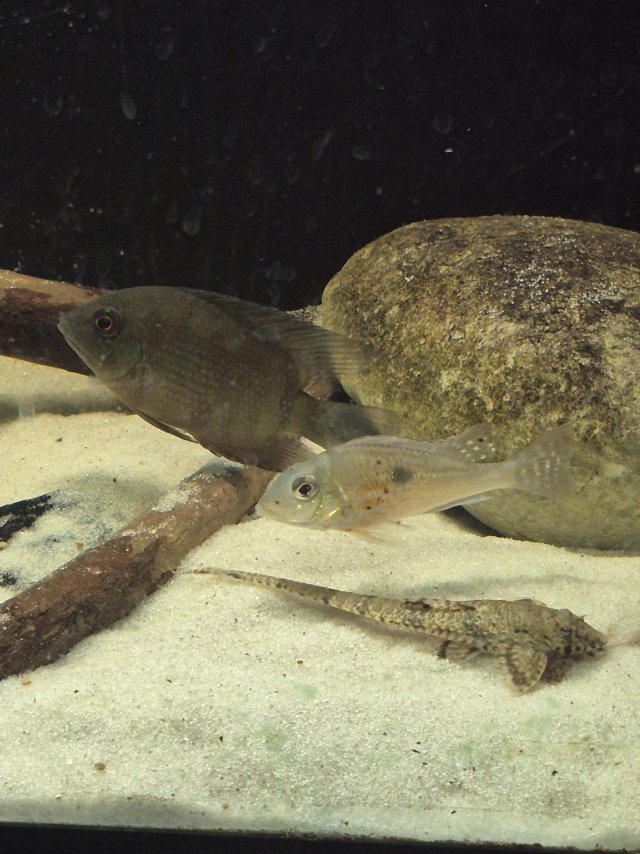
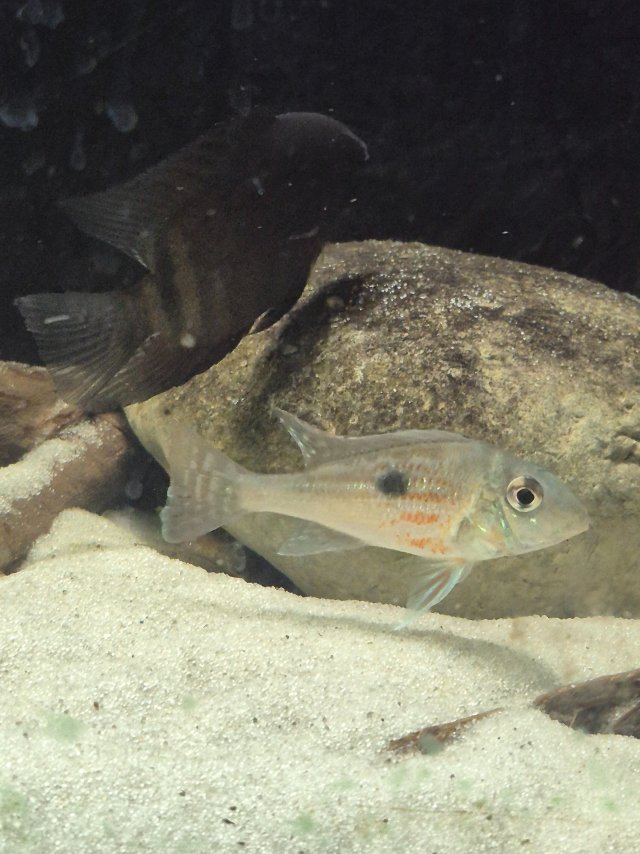
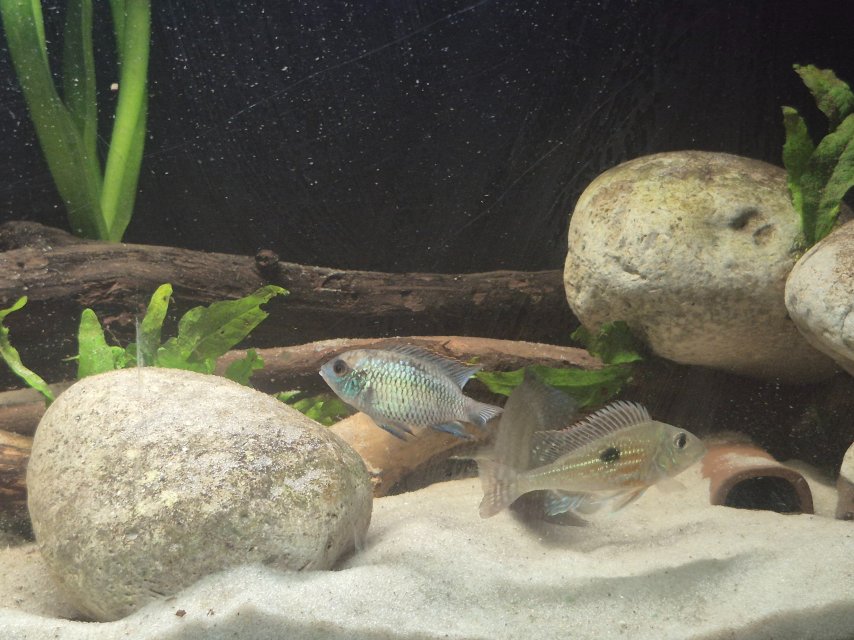
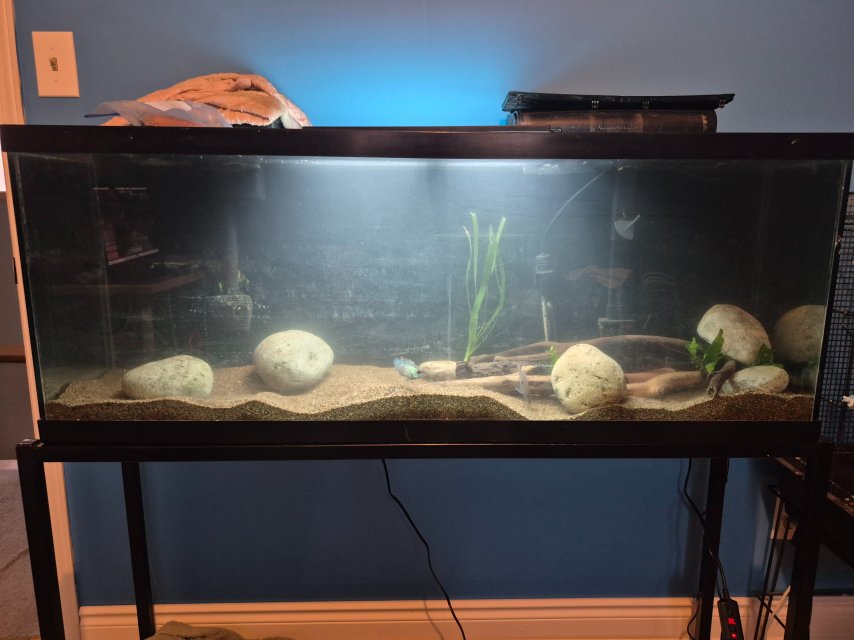
The geophagus sveni seems to be doing really well almost 2 weeks in. It's currently being kept with 1 heros sp, 1 rineloricaria parvae(I think), 1 pseudopimelodus bufonius, and 1 banjo catfish in the 36g growout. The severum and the geophagus sveni seem to enjoy each other's company and hang out around eachother.

876.jpg

874.jpg
 
Last edited:
I got a sveni a few weeks ago. About 3" now. He is a fireball. Chases the congo tetras like a dog chasing birds at the park. He is all over eating all the time. Rushes to my hand at feeding time. Great fish.
 
  • Like
Reactions: neutrino
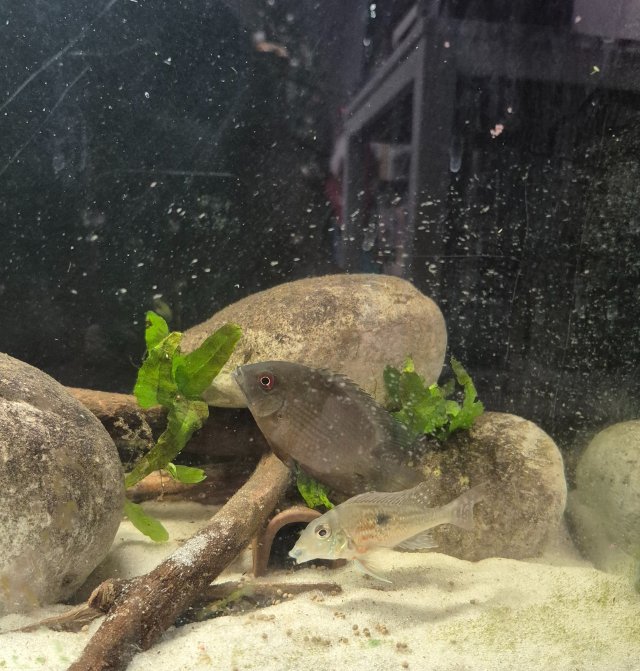
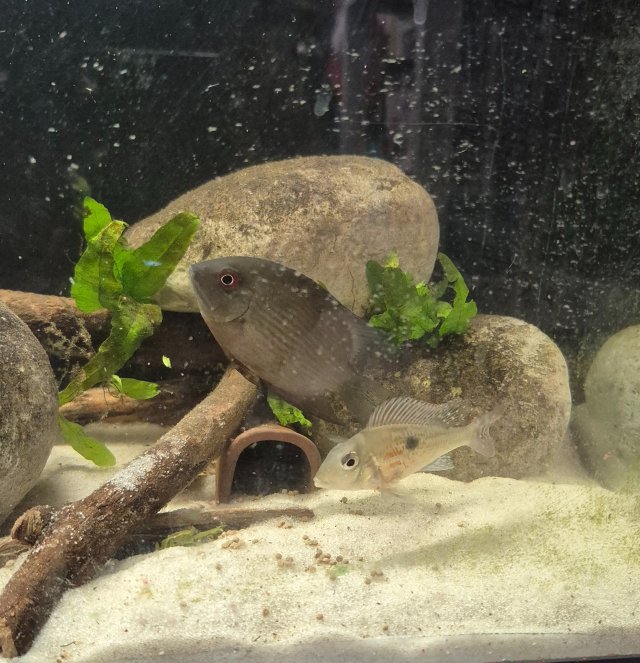
3 weeks in and the geophagus sveni seems to be almost fully healed, he/she is not very picky and eats anything that drops to the bottom of the tank. The severum and the geophagus sveni have been getting along very well together,I often see the geophagus sveni following the severum around almost like the severums right-hand man.

1151.jpg

1150.jpg
 
  • Like
Reactions: LBDave and neutrino
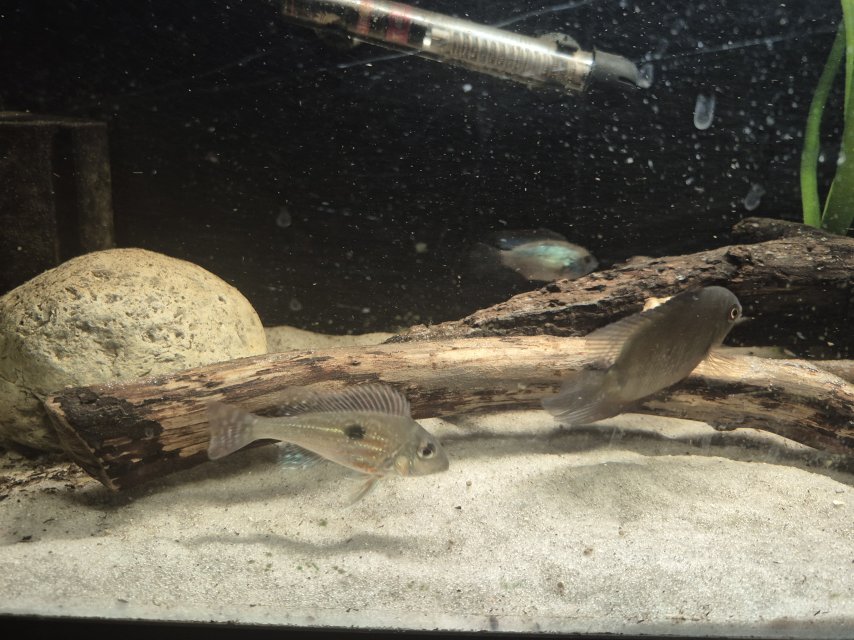
The geophagus sveni seems to have fully recovered from its injuries! Also ended up adding a electric blue acara for some more midwater activity. Just wanted to thank everyone for their help, and may everyone have a merry Christmas and a happy new year!
1483.jpg

1479.jpg
 
  • Like
Reactions: tlindsey
Although many Geophagines are social, some are not.
Those from the Geophagus brazilirnsis clade are some that are not.
So until you can determine which species it is, living solo is not a bad way to go.
View attachment 1568687View attachment 1568686
Above is Geophagus iporsngensis, one of the braziliensis clade, found in cooler, southern waters near sub tropical Rio, and iis very similar in temperament to the loner cichlids of Central America.
It survives in harder alkaline water than the social, soft water geos of of Amazonia and northern S America.
Mine did well as a mated pair, in hard, 7.8 pH water and were quite aggressive, especially when spawning
View attachment 1568688View attachment 1568689

We need to get off certain stereotypes for fish habitat, the truth is many of the widely distributed types can be found in variable biotopes, which is why they've been successful in the hobby for many decades. Another truth is some of the fish we might keep as one or two (example: severums), or even six in a tank (examples: geos, angelfish, discus), travel in much larger groups in the wild.
Yes, absolutely; it's amazing how most of our standard aquarium species can adapt, thrive and breed in a wide range of pH, hardness/softness, temperatures, etc...and yet it seems to be a trend now to fret about flow rate as if only a very specific amount of water movement will provide comfort to the fish. In a natural situation it would be easy to find 2, 3 or more species of fish found living side by side in a stretch of water, but whose feeding strategies keep them in completely different rates of flow. A pelagic species or a bottom feeder in open areas would be exposed to the highest rates of flow, but other species living an ambush predator lifestyle would spend the vast bulk of their time in a slack water micro-environment in the lee of a rock or other obstruction, from which they would periodically launch attacks on nearby prey items.

Seriously thinking that both of those types of fish could be housed in their "preferred" flow rate within the confines of a typical aquarium is delusional. The entire aquarium in most cases is smaller than many of those slack water zones, and yet we have keepers thinking that a few cubic feet of space can be used to replicate the various areas of an entire river. It's just not realistic.

Before we decide that a given fish species is "happier" in a social group or as a single fish...consider that fish, like all species of wildlife, are concerned about not only their own survival, but also to at least the same degree they are driven by the reproductive imperative. The desire to breed and perpetuate not the species, but rather their own bloodline within the species, is being frustrated whenever we keep a single fish. We do it because their aggressive tendencies become inconvenient for us; we can't keep a pair together because they may breed, causing problems for other tankmates, so we keep a handful of singletons together to minimize their aggressions. It makes it easier for us to crowd more species and individuals into our tanks...but think of the frustration we create for them! If you want something obscure about which to worry...there's an interesting target.
 
MonsterFishKeepers.com