

And those two fish at the bottom of this photo what are those... honestly I am looking for a fish that gets big but not to big a fish that comes in all kinds of different varieties and colors and q fish that has different rarities so I can collect rare colors and such.... so I guess that's sounding like a African cichlid school tank huh? But I also want to keep some other species as well that get along but also have different rarities I guessI also advise not to add anymore cichlids. Wait till a pair forms and rehome all the extras.
Peacock bass grow to gigantic sizes we are talking 20 inches plus. They are best suited for tanks 3ft by 8ft or larger.
View attachment 1561537
Not my picture, thank google
If you are looking for more activity in the tank I suggest some dithers. In the wild cichlids live along side other fish like tetras, live barers etc. They use them as an alarm system of sorts. If they are out and about then things are OK but if they are hiding they know trouble is around and hide themselves. Look into swordtails or Molly's. Expect over time some may be lost to predation.
Keeping fish is the ultimate in long game hobbies. True results don't come in days or weeks, it's in years. Soon enough they will get big and you will be rewarded in know you raised them up. In time you will be rewarded with have a big beautiful male like this to watch.
View attachment 1561538
And his wife
View attachment 1561539
Texas Cichlid Turned Completely BLACK!!
- Thread starter heavenboy77
- Start date
You are using an out of date browser. It may not display this or other websites correctly.
You should upgrade or use an alternative browser.
You should upgrade or use an alternative browser.

It's ok to be your first tank and make mistakes, I think all of us on here have, and some of us still do lol. But you're in the right place to learn. It does look like a 55 to me too, we can tell you if you measure it and tell us in inches, feet, centimeters, not just window sized. And if it's a 55 you can grow out a texas in it for awhile, but eventually it will need more space and more water. As Dano mentioned if you want a bustling tank full of fish then you need to go with african cichlids of some sort, or a community tank of peaceful fish, not predators, or cranky cichlids.
The problem with giant fish in a small tank isn't just about agression or fighting though, it also is about water quality. They poop a lot, they excrete hormones, leftover food, everything needs regularly flushed out and diluted by water changes, and having enough water to last between water changes.
The problem with giant fish in a small tank isn't just about agression or fighting though, it also is about water quality. They poop a lot, they excrete hormones, leftover food, everything needs regularly flushed out and diluted by water changes, and having enough water to last between water changes.

Well you guys should be able to know that I took the texas back to the fish store where I was then given credit for them it was less then I paid but what ever... also the cichlid that they bullied I put her in a bucket and she was able to get her color back and was thriving but I took all of them back and started my african cichlid tank I got 2 manbunas so far and I kept 1 texas in the tank that is the same size as Thema little kid basically I'm going to fill my tank up with all male african cichlids I was going to get more but the owner of the fish store wanted to decide that the fish I wanted the Africans I wanted all of a sudden one of them had ick and I couldn't get no more then 2 from his other tank until he treats the others I'm doing to do munbunas and peacock males together and have a colorful tank thanks everyone for the informationIt's ok to be your first tank and make mistakes, I think all of us on here have, and some of us still do lol. But you're in the right place to learn. It does look like a 55 to me too, we can tell you if you measure it and tell us in inches, feet, centimeters, not just window sized. And if it's a 55 you can grow out a texas in it for awhile, but eventually it will need more space and more water. As Dano mentioned if you want a bustling tank full of fish then you need to go with african cichlids of some sort, or a community tank of peaceful fish, not predators, or cranky cichlids.
The problem with giant fish in a small tank isn't just about agression or fighting though, it also is about water quality. They poop a lot, they excrete hormones, leftover food, everything needs regularly flushed out and diluted by water changes, and having enough water to last between water changes.
But I still don't understand is why both males were trying to kill her like that it was not the females attacking her I believe it was the males trying to take her out and dominate the 1 other female I had in the tank because they left her perfectly alone texas cichlids are weird why gang up on one female and try to kill her
With cichlids, just because you have a male and female, don't mean they are gonna like each other and start breeding. They have a complicated process to decide if each other is worthy before they will start breeding.
Here case in point. I got my male three females, eventually he tried to kill all three. Two were rehomed. The third looked like it was going to work, nope I took a nap and woke up to a dead female.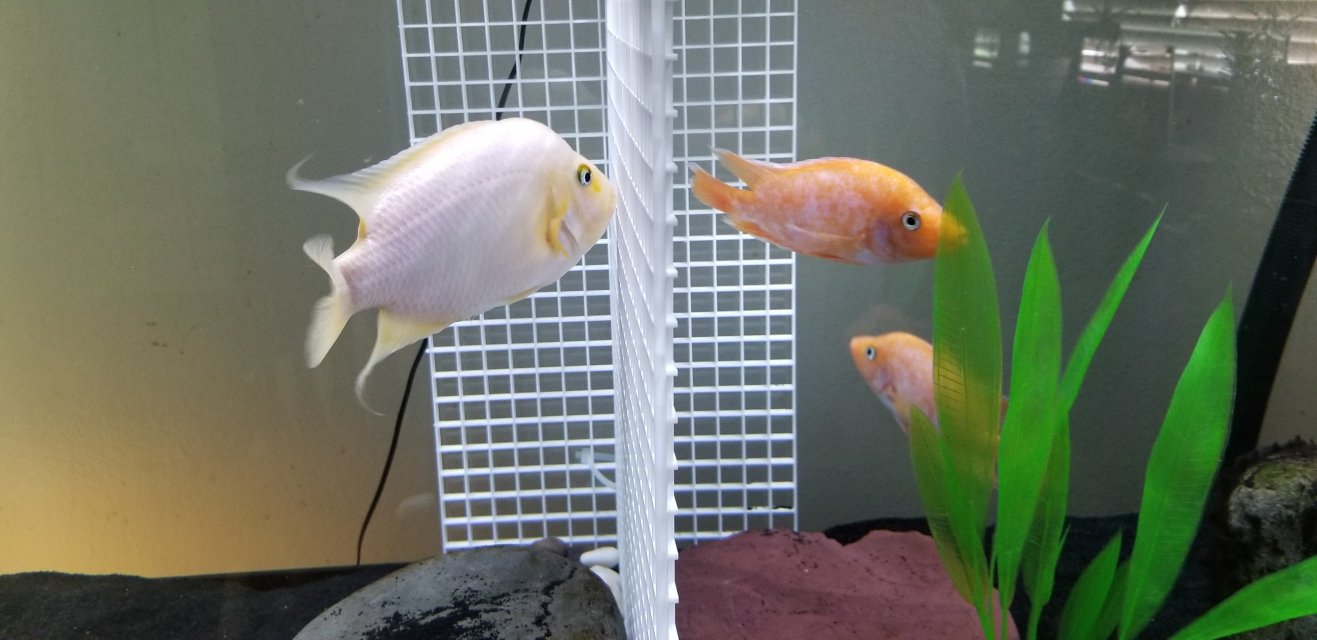
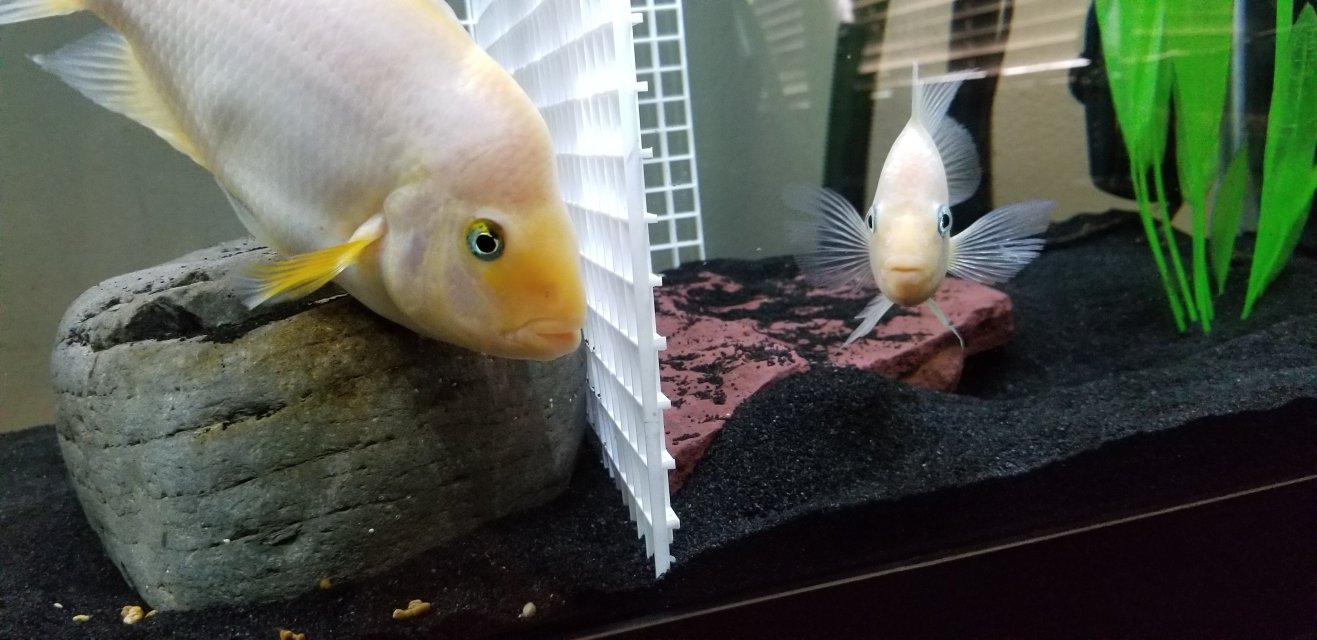

Here case in point. I got my male three females, eventually he tried to kill all three. Two were rehomed. The third looked like it was going to work, nope I took a nap and woke up to a dead female.

I wouldn't make that generalization. Many CA cichlids are social, or at the very least gregarious to some degree, and stereotypes of aggression are often the result of the whole "tiger barb syndrome" thing we're all familiar with, where social species, when kept alone or in too low of numbers, take that as an opportunity to take over a larger expanse of territory given they no longer need to share (and are subsequently more aggressive). Thorichthys are naturally shoaling yet have a reputation for being aggressive in aquariums. When kept in groups, they exhibit spawning synchrony, and will often collectively rear fry with neighboring pairs. Amatitlania don't exactly exhibit spawning synchrony but will spawn at the same time almost coincidentally, based on a shared interest in spawning sites given conditions are right. Certain Amphilophus species in the wild (mainly benthic species) are known for spawning in loose colonies, and idly shoaling. Rheoheros and Cryptoheros are known for the same. Cribroheros and a lot of other rheophilic species are naturally shoaling. In my experience, cramming does decrease aggression, as I can have 3 spawning pairs of Amatitlania in a 3 foot tank with no injuries or casualities, plus the pairs will keep their fry in tight balls in their respective portions of the tank. If I were to say, have a single pair + an extra in the same size tank, the extra would quickly be picked off. I have a pair in a 3 foot tank alone right now that let their fry spread out and feed across a third of it. If I had a shoal of tetras in there (which I have before) they would keep the fry low and close.The principle is true for African cichlids but could not be further from the truth w Central American cichlids
I too have collected CA cichlids in the wild and will be doing so again in a few weeks. Not all CA cichlids inhabit large rivers only shared by 1 or 2 other cichlid species, or maybe none at all. Niche partitioning plays a big role in coexistence. In Panama, where Duane lives, there's only really small picking detritivores/insectivores. However there are a few ecosystems where there are many species of cichlid living in close proximity. In tributaries of the Rio San Juan in CR, where I've collected, tiny streams can host over a dozen species of cichlid at the same time.
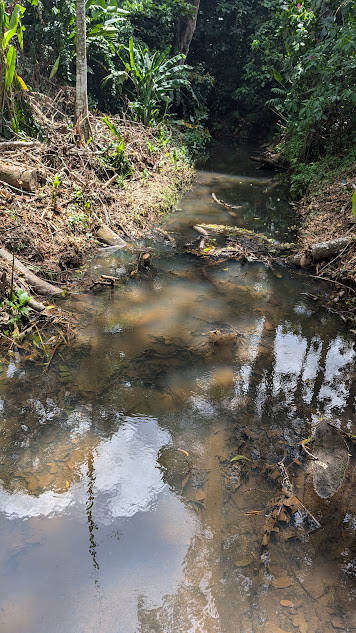
This stream was only about 6 feet wide and 2 feet deep at its deepest. Most of it was only about a foot deep or less. However, in it I caught:
Amatitlania siquia
Amatitlania septemfasciata
Neetroplus nematopus
Hypsophrys nicaraguensis
Parachromis friedrichsthalii
Parachromis dovii
Cribroheros alfari
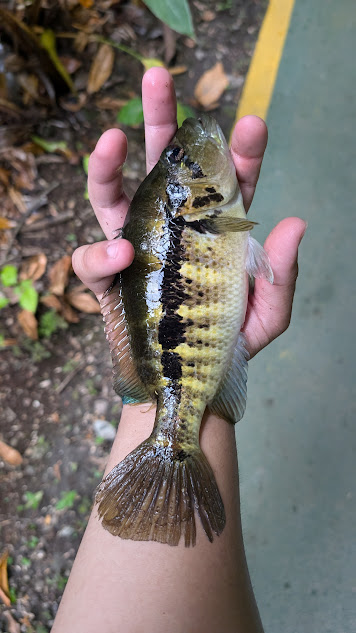
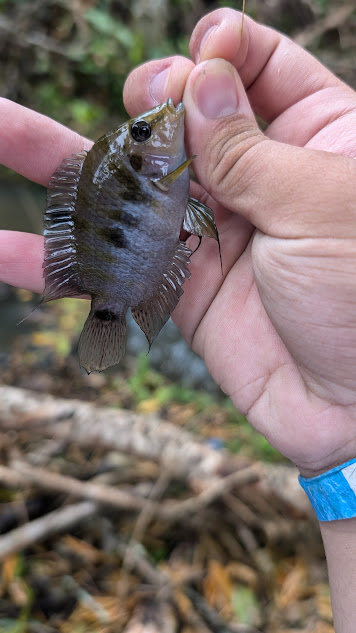
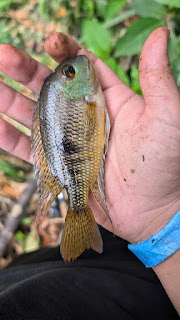

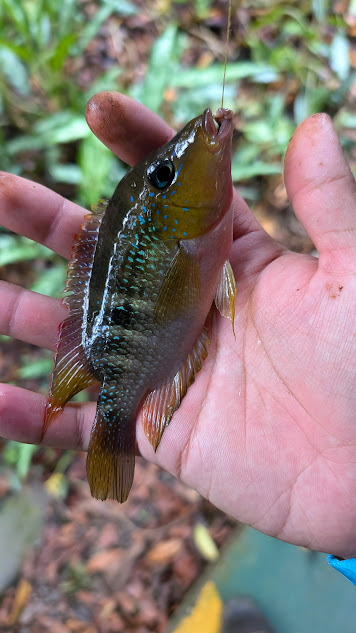
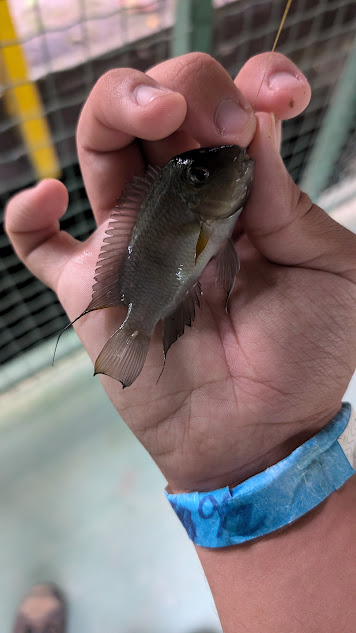
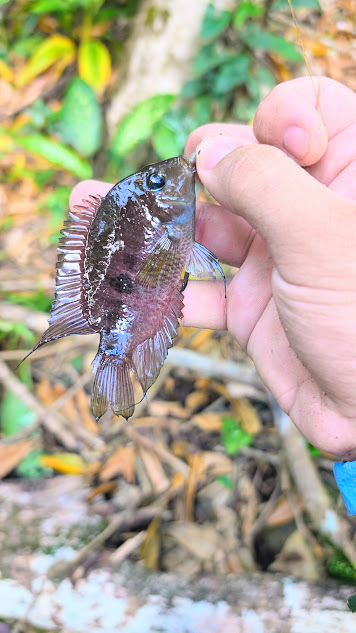
Jeff Rapps also recently collected an equally small stream a few miles south of this one.
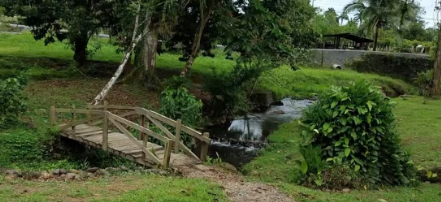
In it he caught:
Amatitlania siquia
Amatitlania septemfasciata
Cribroheros rostratus
Cribroheros alfari
Parachromis dovii
Parachromis friedrichsthalii
Neetroplus nematopus
Andinoacara coeruleopunctatus
He additionally relayed to me personally that Tomocichla tuba were present as well.
This proximity is possible through niche partitioning. The two Amatitlania are able to coexist because septemfasciata prefers faster water and has a higher protein diet. Two Cribroheros because rostratus is more of a benthic sifting feeder vs alfari from what I've seen being more of an opportunistic omnivore. They loved hotdogs in my experience. People catch them on dry flies as well. I'm not sure on the two Parachromis, often 3 because managuensis is present in that river system as well, however I assume size of prey is likely a factor as lacustrine populations of dovii eat a lot of Amatitlania and Neetroplus. I can imagine friedrichsthalii eating more insects and smaller fish like livebearers or tetras. Herotilapia multispinosa can also be found in these little streams alongside everything else. Cribroheros longimanus and Archocentrus centrarchus are allegedly present as well. That brings us to 13 species of cichlid in one river, with many often being found in close physical proximity.
Lake Nicaragua proper has a good variety of species, namely:
Parachromis dovii
Parachromis managuensis
Cribroheros longimanus
Cribroheros rostratus
Neetroplus nematopus
Hypsophrys nicaraguensis
Herotilapia multispinosa
Archocentrus centrarchus
Amphilophus citrinellum
Amphilophus labiatus
and possibly a few other undescribed Amphilophus sp.
Rio Terraba with:
Amatitlania sajica
Amphilophus lyonsi
Parachromis friedrichsthalii
Cribroheros diquis
Cribroheros altifrons
Andinoacara coeruleopunctatus
Rio Sarstun with:
Cryptoheros chetumalensis
Rocio spinosissima
Rocio octofasciata
Thorichthys helleri
Thorichthys aureus
Mayaheros urophthalmus
Petenia splendida
Vieja melanura
Theraps irregularis
Chuco godmanni
Trichromis salvini
you can argue that spinosissima is only found in the little backwater streams but that still leaves us with 10 species of cichlid in the same river.
The list goes on. Just wanted to get my foot in the door there.
Anyway that said I wouldn't put more than a single Herichthys in less than a 6 foot tank, given you want Herichthys. Obviously they get big, and the ones that don't are usually too aggressive (or expensive) to have that many in such a relatively small tank.
But that is the weird part the one male that joined in attacking her already mated with her before I brought the other pair home and put them in the tank he was already paired with her once I introduced the new male and female it was like night and day he turned on her instantly literally after just having babies with her like 4 days before I adder the new pairWith cichlids, just because you have a male and female, don't mean they are gonna like each other and start breeding. They have a complicated process to decide if each other is worthy before they will start breeding.
Here case in point. I got my male three females, eventually he tried to kill all three. Two were rehomed. The third looked like it was going to work, nope I took a nap and woke up to a dead female. View attachment 1561599View attachment 1561600View attachment 1561601
Also just because they breed before don't mean they will stay together. Especially if you add competition. Adding the new fish changed the entire tank dynamics.
With my Amphilophus saggitae Casper and hia first mate I would have to take out the female after each batch of fry cause he would start to defend the fry even against her.
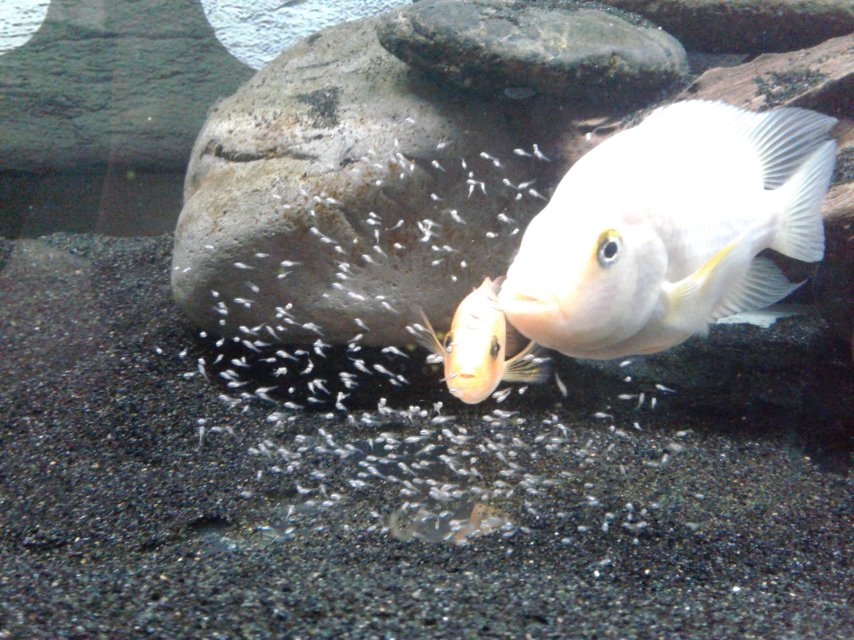
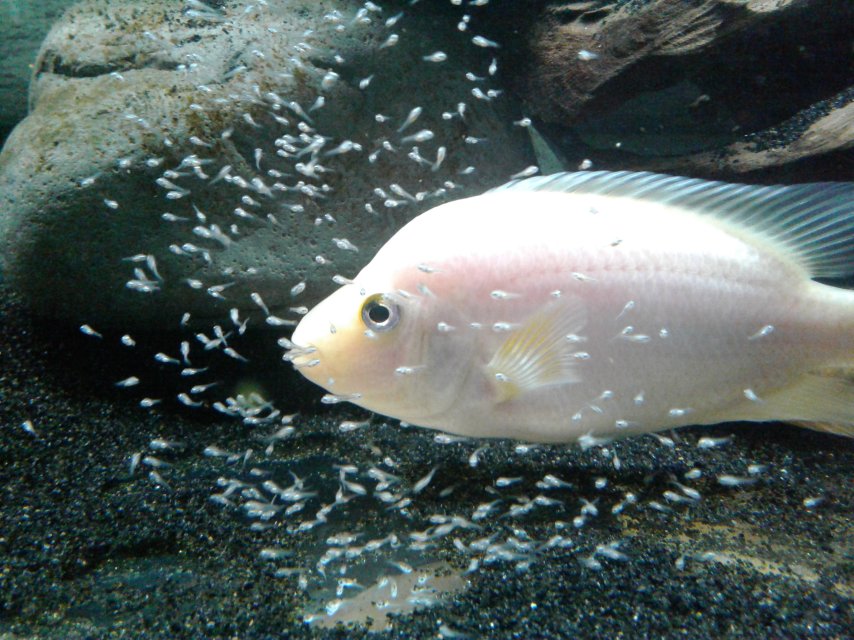
With my Amphilophus saggitae Casper and hia first mate I would have to take out the female after each batch of fry cause he would start to defend the fry even against her.

There are a number of soocial species in Central America, and many will be social as imature and sub-adults.
You will notice in the post a few above this one, that none of the indiivuals are more than than sub-abults and
there are certain loner species that are not listed.
Many of the most northerly cichlids (Herichthys carpintitus complex, The H labridens complex. Mayheros beani complex, and Ampholophus islanus are some of those, this also includes island cichlids such as Nandopsis, that are loners and seldom play well with others.
So trying to house them with other species of cichlids, ecpecially in a tiny tank of under 6 ft (for even 1 pair) is frought with problems.
Research into how they live in nature, and at what stage they become territorial is needed, if trying to keep them successfully.
You will notice in the post a few above this one, that none of the indiivuals are more than than sub-abults and
there are certain loner species that are not listed.
Many of the most northerly cichlids (Herichthys carpintitus complex, The H labridens complex. Mayheros beani complex, and Ampholophus islanus are some of those, this also includes island cichlids such as Nandopsis, that are loners and seldom play well with others.
So trying to house them with other species of cichlids, ecpecially in a tiny tank of under 6 ft (for even 1 pair) is frought with problems.
Research into how they live in nature, and at what stage they become territorial is needed, if trying to keep them successfully.
