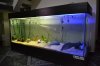
the best polypterus tank

  • We are currently upgrading MFK. thanks! -neo
Status
Not open for further replies.
I don´t think that my P. could jump out of the tank. I left no space around it.

I would also like to add that i consider my company as one of the best in the world. It offers the best for research and provides evrything you need for your job. You all use our products.
 
I don´t think that my P. could jump out of the tank. I left no space around it.

I would also like to add that i consider my company as one of the best in the world. It offers the best for research and provides evrything you need for your job. You all use our products.

i didnt know my Sen could jump.. with the lid closed.. but i found him on the floor.. now i use tape... just saying >>
 
i already read all post from page 1 to 11...

my question is.. is this "the best polypterus tank" ??

Here they are
1zyaefs.jpg


2s7gzs6.jpg


2znpe2s.jpg
 
also based on the plant behavior in that tank i would say you got insufficient wattage of light... and do you have a co2 source for the plants?? don't tell me that your bichir produce co2 for your plants....
 
Nobody is going to care how much you know about fish until you learn how to use your knowledge a better way than trying to prove people wrong all the time, you did it on the arowana thread and now you are bringing it to the bicher thread, stop acting like a cocky little b@itch and help people that need help if you really know that much about these fish thats what mfk is about, Its ok to share what you have and brag a little but saying your way is the best and only way isn't going to work out on here. I do believe you know alot about polys but you have to be more open minded to the different ways people keep there fish even if its not the superb way.
 
I will not talk about my workplace and i will not show any pictures from my workplace. It is irrelevant for the topic.

Can you explain why they are not relevant? I can explain why they are.


Cohazard said:
What size enclosures does Monsanto use in the lab for the bichirs, and approximately how many animals have been taken into captivity for this R&D program?


I ask this because you are criticizing the fish keeping method of most members of this community, as insufficient. You are keeping an ornate in a 60g tank, which is obvious to most of us, too small for a full grown ornate. Sure, you can always upgrade later, but you never mentioned plans to in any of your posts. So if you are criticizing our aquarium setups, while yours is substandard, I am curious how the size of the aquariums are in the R&D project, especially since you are keeping large species ornatipinnis and endlicheri.

DariusAmurdarja said:
You depend on animals that are taken out of their natural habitat. You are unable to breed them. There are no numbers about polypterus imports into the US. They come unregistered in the hundredthousands, end in some shabby pet stores and die in huge masses. There is no data avaivable about their numbers in nature and how their population is affected. I think we will bring up a complete import stop for those species.

Whether you admit it or not, every specimen you remove from the wild population condemns you guilty of contributing to what you perceive as a problem. I asked you what your numbers were so that we could get perspective, perhaps your company has worked out a reasoning behind the number they collect to sustain a particular population, but you could not provide such an answer. You had a window to promote responsible practices, and you failed to take that opportunity.

Cohazard said:
What is the relevance of genes from early cladista to Monsanto's work in bioengineered crops?

Considering you claim to work for a company whose primary focus is food crop, I am incredibly curious what the link is with bichirs? Why would you continue to breed them with no plans to distribute them? You are removing fish from their natural environment, using them for profit, and proliferating that captive unnatural life to what end? More financial profit? You are not an educational institute, you are not simply researching for knowledge, you are searching for the next 'product' you can produce to make profit from.

DariusAmurdarja said:
sorry to burst your bubble, but your "**** nature i take evrything i want!" times are over.And i´m glad about that. We must protect nature from such rapings. Those creatures do not exist to please you. Do you even realize how much damage is done to their habitats?

What is worse, taking the fish you want for personal enjoyment, or personal profit? If our hobby is raping mother nature, so is yours, but it makes money doing so.

DariusAmurDarja said:
That is no animal abuse? To "buy" an animal and then let it get ripped apart the very same day? Thats what i mean. Many here see those creatures as product. Something you buy and throw away when you don´t need it anymore. Others here celebrate the fact that they collected as much species as possible and put them together in one tank. It would help alot if some guys here would start to see those animals as living beings and not as a product. Just look at the amount of hilarious questions...For example which fish can be put together with polypterids. Would someone ask which animals could be kept with a caiman? Maybe some boa constrictor? Or a nile croc?

You are correct that letting an animal get ripped apart could be perceived as animal abus IF it were done intentionally, however, this is not the case. The fish keeper wanted to clear his own bias against that lunfish, and learned that his jewel cichlids were not compatible, sadly, to the detriment of the lungfish. He did not dispose of it for lack of need, he wanted to learn about the lungfish.

We here have a passion for fish, so we ask questions to learn! What is so funny about someone clearing up a compatibility concern before an incident happens as with that fish keeper and his lungfish? To me, that is extremely responsible thing to do. Knowledge you gain should be passed along, not considered common sense for those who have not acquired it.


Cohazard said:
what happens to the baby polypterides that Monsanto produces?


Clearly without intent to distribute, you cannot continue to proliferate the fish endlessly, but once you've collected tissue samples, then what? They regenerate and have their tissue 'harvested' later? You admitted that none of the fish are released:

DariusAmurdarja said:
The fish are calmed down with medication before any tissue samples are taken. And no, none are released into the wild.

DariusAmurdarja said:
And i don´t know what you try to say with "once in a tank, them cannot go back"
Thats nonsense...a Polypterid is not a domesticated animal. He will never lose his natural instincts.

I am surprised you do not understand his point of "once in a tank, them cannot go back", considering you do not release them either, to restore the fruit you took from nature, but I'll explain. Private aquaria can be home to many parasites and bacteria not present in the original ecosystem the fish came from. It would be risky to rerelease without extensive quarantine and and testing performed first.

DariusAmurdarja said:
ANother is that many idiots release such animals into foreign ecosystems.

...see, we are savvy enough to understand the risks for introducing foreign bacteria, virus, parasite, etc... into non-native ecosystems, it's not just the fish that are of concern, the milllions of microbial life need to be considered.

Cohazard said:
You said you have one, so I assume other employees have access to them too?
My final question, I asked because of something you said earlier in this thread:

DariusAmurdarja said:
We should not just keep them, we should do evrything to breed them. And we should not see them as products. We should show some responsibilty towards them. I believe, that we should not keep any species in captivity that we can´t breed.

I will give you the benefit of the doubt, and assume that you did not mean 'personally' breed in our own homes, but if I give that to you, it also means that you are ignorant of the fact that many many captive bred polypterides are available in the hobby. Ornatipinnis, senegalus, lapradei, palmas polli, endlicheri, congicus, to name a few that have been successfully bred in captivity, and farmed, thus reducing pressure on collecting from wild populations.

 
Darius, in my earlier posts I believe I was welcoming to you and gave you the benefit of the doubt, even though inadvertently you had tried to insult my (and others) intelligence on the matter.
I had hoped that you would realize this forum had more knowledge and understanding than you gave us credit for.
Was I wrong? Seems so.

You mentioned about the success so far breeding Ornatipinnis and Endlicheri.
These are two of the most common and easiest Bichirs to breed, and for a lab with the means to do so, no real challenge AT ALL.
As Cohazard just mentioned, there is a whole big list of successfully bred fish in the markets right now.
Sure most are bred through hormones, but I would imagine your company is no different there.
Infact there is only a handful of Polypterus that have not been bred yet.

To end, it seems like you have underestimated us here.
Based on some threads made by either ignorant "Fish wanters" (not FISH KEEPERS), people who are genuinely trying to learn but have made errors, or freak fish deaths from true fish keepers.
Wrong move, not smart.

 
Status
Not open for further replies.
MonsterFishKeepers.com