300ish Gallon plywood - First attempt

  • We are currently upgrading MFK. thanks! -neo
toddhgr;3732441; said:
This is what I plan on using to coat my tank. I know that you've already picked out a different product, but it can't hurt to take a look.
http://www.plastidip.com/industrial_solutions/Plasti_Dip

I just did a quick google search and it one source lists this product at only 24% solids.

If this is percent by volume what this means is that you'd need to apply four times as much to get the same dry mil thickness as an epoxy resin.

If the 24% is percent solids by weight then it might not be so bad. I would look into this further if I were you.

Having carriers and solvents in a sealer is not necessarily a bad thing. They often mean more potent resins can be used and often make application easier. But when building a plywood tank what we're worried with is the final dry mil thickness of the cured membrane. The lower the percent solids the thinner the final coat is and the more expensive it is to get this proper build thickness.

Just wanted to point this out to those who might not consider it.
 
CJH;3733239; said:
Does the paint have a soft or hard feel to it once cured?

More importantly, when you rub your fingertip across is does it have a slick feel like a plastic cutting board or sort of a grippy feel like a tire or inner-tube?


its pretty slick where its thicker. But most places it still has a bit of the wood grain texture to it since it is only 1 coat thick.
 
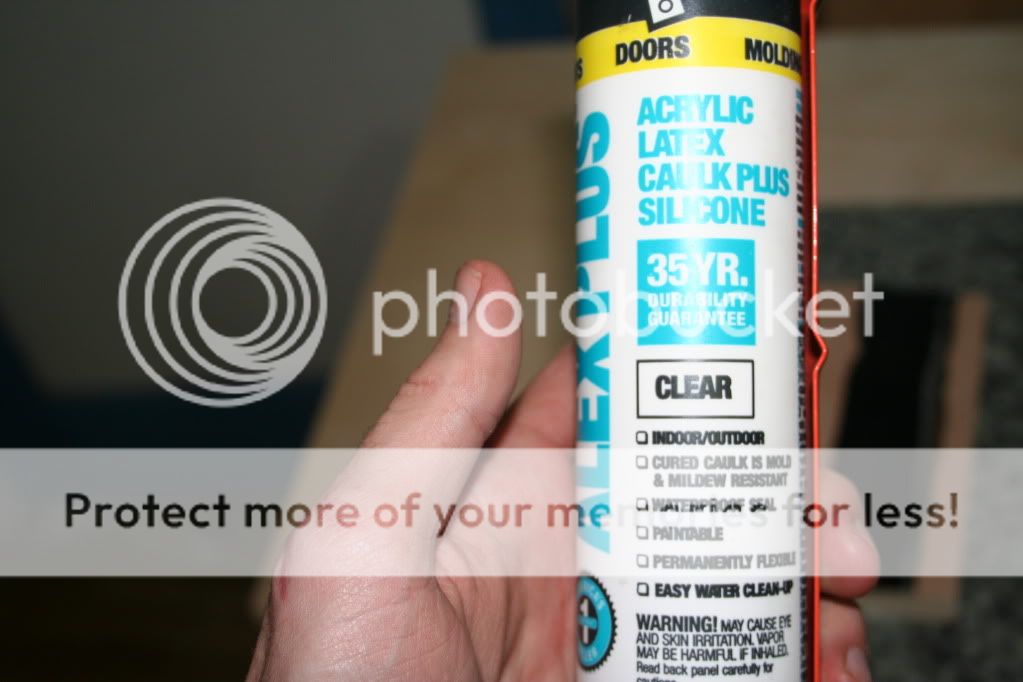
Alright. We have some good news. I redid my 2 test pieces with DAP 35 year Sealant. Which is latex based caulk with silicone mixed in.


This stuff.
002-9.jpg


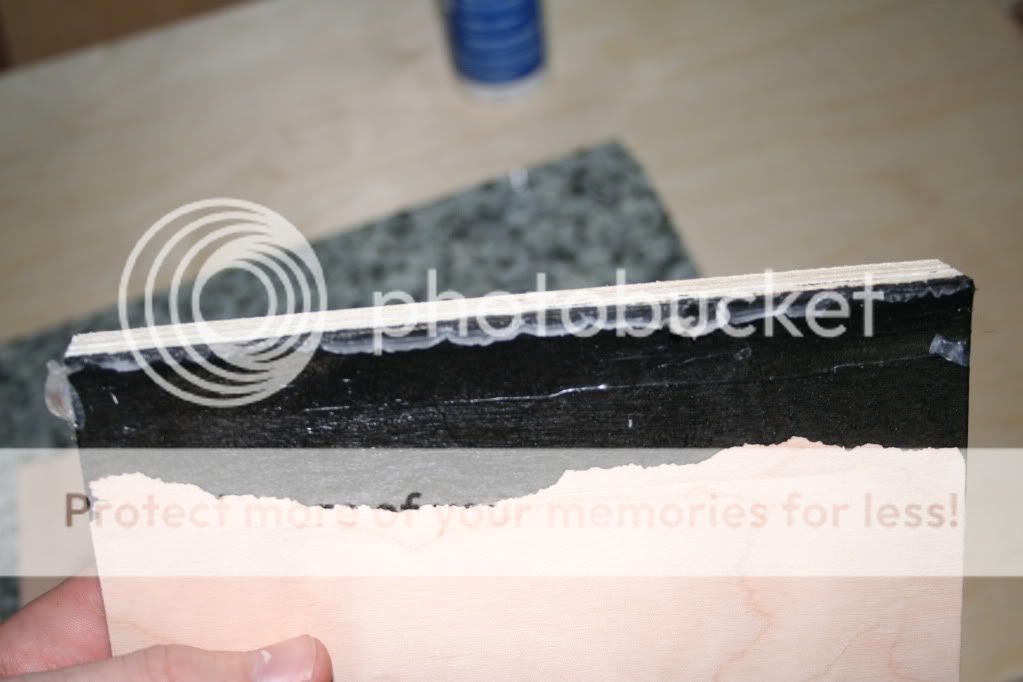
On the piece already painted the Caulk stuck to the cured rubber VERY well. The joint stretched about 4 inches then broke but not a bit pulled off the rubber coated wood. It has excellent adhesion.
001-11.jpg


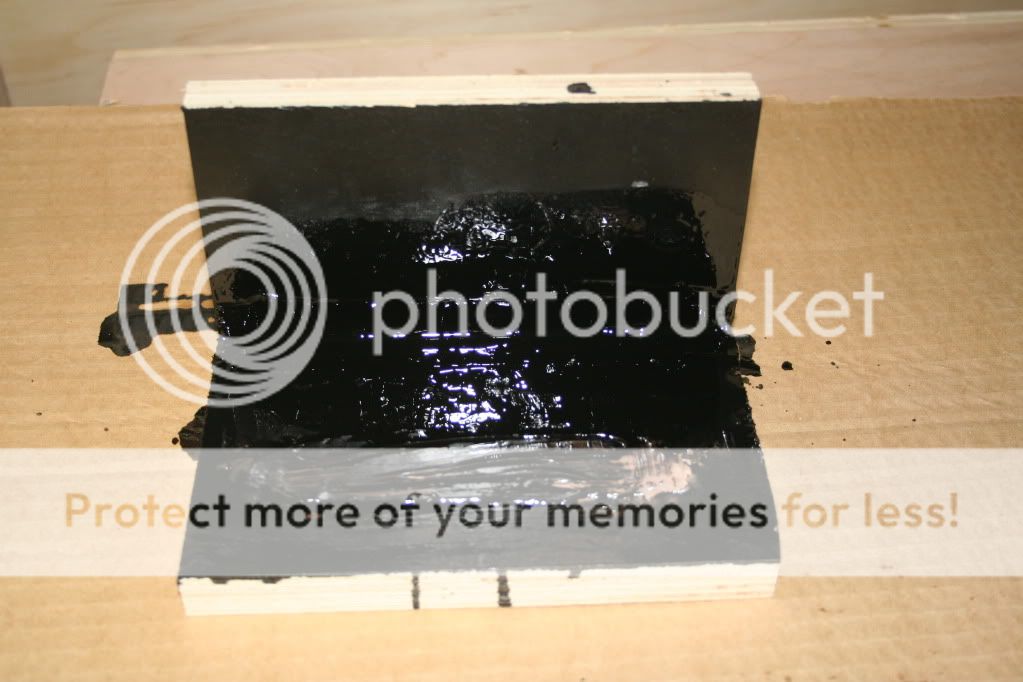
The other piece that Was bare wood in the corner was sealed with the caulk and repainted over with the rubber paint. The bare patch that is seen in the flat section is 100% silicone from the earlier test. As you can see the paint avoided the 100% but completely covered caulk joint this time. Which bodes well.
003-7.jpg


So it looks like the caulking will work. Also it being a silicone mixed mixture that dries clear and is rated at 35 years means it will last a LONG time. Which I like.
 
My paint over caulk/silcone test piece proved promising. It can be scratched off but takes a good deal of force. Which I think will be fine since my test piece isn't nearly fully cured and is only 1 coat thick.


So tomorrow I'm gonna dig around and see what I have and coat the inside corners of my sump with either plain old latex caulk or the caulk/silicone mix I used on my test pieces.
 
I'm going to find some caulking and do the sump box today.

But I may not have photos for you for a day or two since I managed to pick up a virus on my tower. So I'm gonna reinstall my computer. I'm still on a release client of Windows 7 anyways to need to switch over to the official version.

I'll still be posting from my other computers or my phone but they don't have the software for handling my camera. But pictures will come soon.
 
Got the insides edges of the sump box coated with caulking. I'm gonna give it a few days to dry before it gets the first coat of rubber.

Little tip. Lay you beads in the corner and use a plastic spoon to run the bead. Nice even clean lines and it forces the silicone down into the joint a bit.
 
Nicely done, im looking forward to see the results.
 
Jakob;3737258; said:
Nicely done, im looking forward to see the results.


Thank you. If you have any questions for your build let me know. I made a few posts on your thread.


Small update to follow. Just got my computer up and running after reinstalling windows 7 today. So testing everything out.
 
Alright. I had just enough siliconized latex caulk left in that tube I had on hand to do my sump which is nice. I also picked up another tube to do the main tank if this works out.


Here is the sump with its new joints. Note this Latex caulk is white which is very common but since this is 35 year with silicone mixed in it dries clear. Which is an easy indicator of when it is dried and cured.
001-12.jpg


So in 2-4 days when the caulk has dried fully and is absolutely clear it will get its first coat of black rubberized paint. Followed by a 2nd coat 12-24 hours later as recommended by the manufacturer.
 
MonsterFishKeepers.com