

Ive head they have two rows of teeth, one set behind the other and I've been trying to find a picture of a bichir skull but i cant find one that really shows the teeth. Can anyone confirm or deny this? Also how strong is their bite? Anyone horror stories of getting attacked by your bichir?
bichir teeth
- Thread starter Wretched5705
- Start date
You are using an out of date browser. It may not display this or other websites correctly.
You should upgrade or use an alternative browser.
You should upgrade or use an alternative browser.

I don't think it's true. It's true their bites are pretty strong, but they rarely attack anything bigger than itself, not talking about human.

This all I got, but I know there are a couple of threads that show a close up of teeth. As for attacking humans...haven't heard of any.
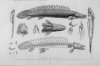


They only have a single row of teeth. Here is the lower jaw of Polypterus bichir bichir:

Image comes from: "
The Cranial Anatomy of Polypterus, with Special Reference to Polypterus bichir
Edward Phelps Allis, Jr"
Their bite is strong, but they don't ravenously attack objects, that's not their nature. Their strength is to hold onto wriggly prey (ambush hunters).
Image comes from: "
The Cranial Anatomy of Polypterus, with Special Reference to Polypterus bichir
Edward Phelps Allis, Jr"
Their bite is strong, but they don't ravenously attack objects, that's not their nature. Their strength is to hold onto wriggly prey (ambush hunters).

Cohazard;3530026; said:They only have a single row of teeth. Here is the lower jaw of Polypterus bichir bichir:
Image comes from: "
The Cranial Anatomy of Polypterus, with Special Reference to Polypterus bichir
Edward Phelps Allis, Jr"
Their bite is strong, but they don't ravenously attack objects, that's not their nature. Their strength is to hold onto wriggly prey (ambush hunters).
NOT TRUE and this pics are just drawing. I have open the mouths of my previous death bichirs before and they have more than just a single row of teeth. I've seen my ornates and congicis with more than a single row of teeth. Try looking at your bichirs mouth especially the congi as they seems to have the biggest teeth of all the bichirs. You will see that there are more rows of teeth. In most upper jaw species there is a single clear row of teeth but if you ever get to dissect one you'll see it for yourself. Even the lips have some tiny teeth on it.
Most predatory fish that like to hold it's prey have more than just one single row of teeth. Wolffish, snakeheads, gars and many more gar them. The most famous would be the sharks.
King-eL;3530188; said:NOT TRUE and this pics are just drawing. I have open the mouths of my previous death bichirs before and they have more than just a single row of teeth. I've seen my ornates and congicis with more than a single row of teeth. Try looking at your bichirs mouth especially the congi as they seems to have the biggest teeth of all the bichirs. You will see that there are more rows of teeth. In most upper jaw species there is a single clear row of teeth but if you ever get to dissect one you'll see it for yourself. Even the lips have some tiny teeth on it.
Most predatory fish that like to hold it's prey have more than just one single row of teeth. Wolffish, snakeheads, gars and many more gar them. The most famous would be the sharks.
Earl, you are just flat out wrong, and I've got more proof than just a guess from looking at the outside of the mouths of my polypterids.
Yes the image I posted is a drawing, but it comes from an extensive study done on the cranial anatomy of Polypterus bichir bichir (by Edward Phelps Allis, Jr.) a species which you claim should have several rows of teeth.
Here is a link to the paper, and if you jump to the last paragraph of page 245, you will find the section covering the Mandible (lower jaw), and lots of scientific names for the many bones that form the jaw, followed by the section covering the Maxillary (upper jaw).
Read it and you will find this:
"The dentary is a long and rather slender bone, the anterior end of which curves mesially. It bears on its dorsal edge a single row of sharp stout teeth."
The bumps on the lip you refer to are not teeth. They are lobes of flesh, texture, which helps the polypterids grip their prety even more, think of those globes with rubber grip on the palms, same principle.
Those structures increase the surface area of their lip, thus aiding in grip, but they are definitely NOT teeth. I'm sure thee is a scientific name for those structures but I don't know it and don't have time to look (I'm typing this between calls at work, we're swamped with work).
You will also find this line helpful, same paragraph:
"...the anterior portion of the splenial, the latter bone projecting dorsally above the articulating surface with the dentary and forming a pronounced ridge which lies parallel to the outer, tooth-bearing edge of the dentary, and is separated from it by a deep groove which lodges the ramus mandibularis internus facialis and a branch of the ramus mandibularis trigemini..."
I believe it is this ridge of bone which you are confusing as a second row of teeth.

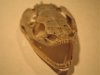

great pic looks lik a raptor skull
SimonL;3530935; said:Skull pic....