


Finally wild caught cichlids in Panama
- Thread starter duanes
- Start date
You are using an out of date browser. It may not display this or other websites correctly.
You should upgrade or use an alternative browser.
You should upgrade or use an alternative browser.


Andinoacara is a great species to start with. It's a shame they're not available stateside. Enjoy them and keep us updated.

There are probably two reasons the A. coeruleopuntatus are not often seen.
Both Panama and Costa Rica (where they are common) have become quite environmentally aware of how unique their flora and fauna is, and are legally and strictly restricting export of any of their animals.
Another ,maybe more to the point reason, are the economics, a 1 kilo package sent from Panama City to somewhere in the states, within 48 hours, runs approximately $300. Add to that, the cost of the collecting trip, and to break even on a bag of fish, the cost per individual would put them way over the top, for a basically brown one without deformity to makes it trendy.
Both Panama and Costa Rica (where they are common) have become quite environmentally aware of how unique their flora and fauna is, and are legally and strictly restricting export of any of their animals.
Another ,maybe more to the point reason, are the economics, a 1 kilo package sent from Panama City to somewhere in the states, within 48 hours, runs approximately $300. Add to that, the cost of the collecting trip, and to break even on a bag of fish, the cost per individual would put them way over the top, for a basically brown one without deformity to makes it trendy.

I guess that's why my search for panama native fish has been so hard on my upcoming attempt at a biotopeThere are probably two reasons the A. coeruleopuntatus are not often seen.
Both Panama and Costa Rica (where they are common) have become quite environmentally aware of how unique their flora and fauna is, and are legally and strictly restricting export of any of their animals.
Another ,maybe more to the point reason, are the economics, a 1 kilo package sent from Panama City to somewhere in the states, within 48 hours, runs approximately $300. Add to that, the cost of the collecting trip, and to break even on a bag of fish, the cost per individual would put them way over the top, for a basically brown one without deformity to makes it trendy.
 . Anyways this is such a cool thread, and super awesome looking fish. Have you gotten them to eat yet?

There is one species of cichlid named after Panama, Crytoheros panamensis. It will be interesting if you can locate them and learn about their habitat.
I kept a pair for years until they died from old age. They bonded strongly for life, even long after their fertility time. They are the most rewarding cichlid I have ever had in term of personality and subtle beauty. I was trying to get replacement, but uncessful because they are rarely available, and the few I got did not live to maturity.
I kept a pair for years until they died from old age. They bonded strongly for life, even long after their fertility time. They are the most rewarding cichlid I have ever had in term of personality and subtle beauty. I was trying to get replacement, but uncessful because they are rarely available, and the few I got did not live to maturity.
I had panamense back in the States, once in the 90s, and again in 2014 just before moving to Panama, I received the last group in a "Box Swap" between the Milwaukee Aquarium Society, and the Capital City club. Both groups spawned for me, and are on my radar here again.
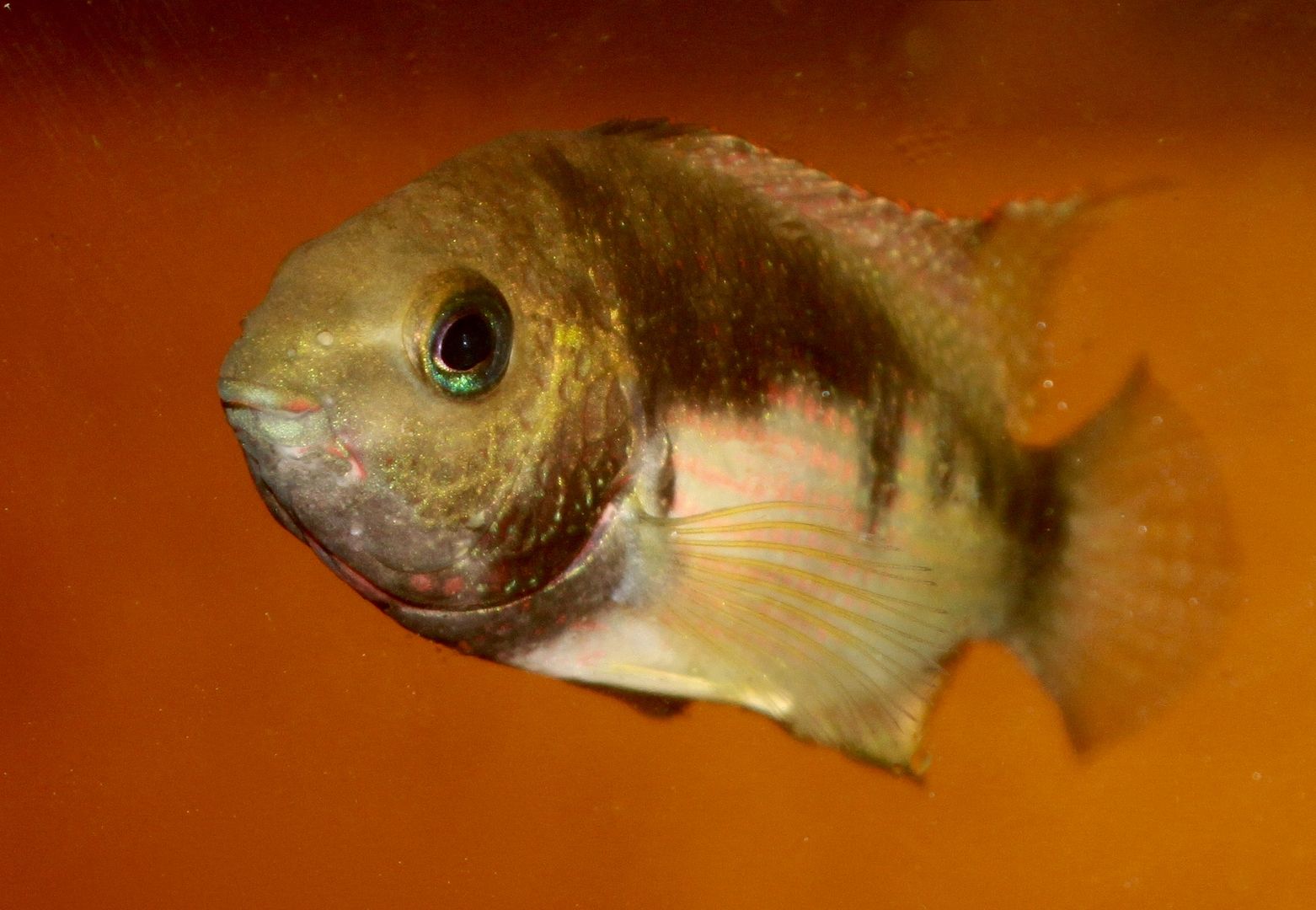
above and below the 2014 varient.

Panamense is found close to my area in Central Panama, so may happen yet, but my hopeful at the moment is Istmoheros tuyense.
The tank the Andinoacara are in, is a 180 gallon 6 footer, most plants are pulled from Lake Gatun, as were the 25 or so Gambusia (mosquito fish) used to cycle it, they are still there hanging near the surface.
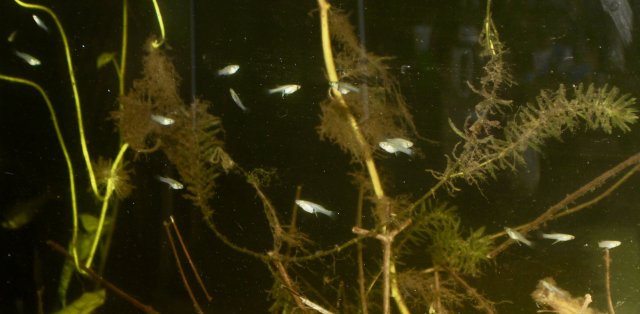
It appear there are 3 male Andinoacara that have already divided the tank into 3, and 5 or 6 females that roam the entire tank at will.

Thay have all started eating flake, after watching the Gambusia chow down. When the Gambusia head down from the surface, the cichlids immediately head for there hide holes.

The tank is open top during the day to take advantage of sun, no artificial light yet.
But covered at night to prevent toxic frogs from spawning in it, bats from drinking and then dropping turds in it, and snakes from hunting it it.

above and below the 2014 varient.

Panamense is found close to my area in Central Panama, so may happen yet, but my hopeful at the moment is Istmoheros tuyense.
The tank the Andinoacara are in, is a 180 gallon 6 footer, most plants are pulled from Lake Gatun, as were the 25 or so Gambusia (mosquito fish) used to cycle it, they are still there hanging near the surface.
It appear there are 3 male Andinoacara that have already divided the tank into 3, and 5 or 6 females that roam the entire tank at will.
Thay have all started eating flake, after watching the Gambusia chow down. When the Gambusia head down from the surface, the cichlids immediately head for there hide holes.
The tank is open top during the day to take advantage of sun, no artificial light yet.
But covered at night to prevent toxic frogs from spawning in it, bats from drinking and then dropping turds in it, and snakes from hunting it it.
Last edited:
