

Geos dropping like flies

  • We are currently upgrading MFK. thanks! -neo
Geo's, are "sand sifters" and in nature live in areas where sand is the dominant substrate.
I have used PFS with Geo's since the 1980s, without a problem.
I cannot give reason why your Geo's die, but I do know sand is not the cause.
I will say 40% water change is a bit wimpy for fish that live in rivers, where the water is totally changed by riverine flow every second, during certain seasons.
Are you quarantining any new fish? for proper duration? or just tossing them in when you buy them?
It could be that at some point, a bacteria was inadvertently introduced that is chronic in nature, and kills over time. And has set up shop in your tanks.
Many Geo's come from waters high in tannins, and those tannins keep certain bacteria in check.
These bacteria may not be "acutely" infectious, but become a chronic nuisance to susceptible species over time.
Some Amazonian and northern S American fish kept in aquariums do not always die but are prone to infections (I've seen many severums with nasty HITH, others such as oscars come to mind), if not kept in tannin infused waters. Geo's may be just more sensitive, and actually succumb.
Also consider season changes Amazon fish have evolved to live in. During rainy season, they may live for months in white water, but during the dry season tannins constantly build up (black water, where pH can drop to almost 4) these seasonal changes may provide a temporary purge or cleansing, reducing bacteria numbers.
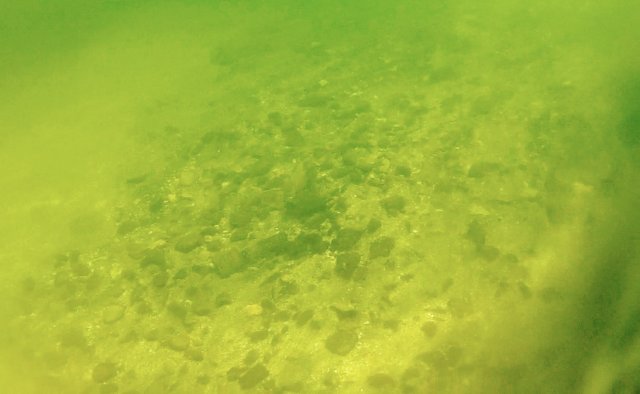
Here is a pic I took of the the substrate in the Mendahuaca river in Colombia.
fullsizeoutput_2d5.jpeg
Looks and felt a lot like PFS to me.
IMG_0239.JPG
 
It's not the sand, they like sand. Wouldn't be reason to suspect sand unless it's an old tank and the sand was thick and compacted and only recently disturbed for some reason. I'm not a Hikari fan, but I wouldn't expect it to kill your fish. Hard to say what the exact issue is but here are some random thoughts.

Wouldn't feed mine the Marineland flakes, either, cheap ingredients and way too many ingredients as follows: wheat, corn, gluten, oatmeal, corn starch, potato, two soy ingredients, and I don't feed foods with soy in them-- most forms of soy can cause digestive inflammation according to various studies, like this one: link

No need to feed them twice a day ime, like most fish they do better when not overfed. Also, red head geos don't take well to stress, anyone bothering them in your tank? And they like sufficient oxygenation, wouldn't expect that to be an issue with the FX6 in the tank, but just something to know.

Finally, do I understand correctly that your ph spikes after a water change? Do you test to know how much? Most fish can tolerate ph changes better than some think (they've done studies), and red heads are actually tolerant to fairly high ph, but big changes and too high and it would be something to consider.
 
  • Like
Reactions: tlindsey
One more thing, what brand of pfs was it?
Not sure of the brand, it was from Leslie's pool supply.

Doubt it's the pfs, my clowns bury themselves in it and haven't had a problem. How much different is your tap ph? You might be unlucky enough to have to age your water before water changes. Just get a food grade 55gal barrel and fill it and use that for water changes if that's the case.
So, after the tap water settles, the pH is around 7.8-8pH. So, I actually already "age" water for water changes to account for some pH settle time. Typically it is aged 48-72hrs in a food grade barrel with a circulation pump and heaters to make sure it goes in the same temperature to avoid temp spikes.

Geo's, are "sand sifters" and in nature live in areas where sand is the dominant substrate.
I have used PFS with Geo's since the 1980s, without a problem.
I cannot give reason why your Geo's die, but I do know sand is not the cause.
I will say 40% water change is a bit wimpy for fish that live in rivers, where the water is totally changed by riverine flow every second, during certain seasons.
Are you quarantining any new fish? for proper duration? or just tossing them in when you buy them?
It could be that at some point, a bacteria was inadvertently introduced that is chronic in nature, and kills over time. And has set up shop in your tanks.
Many Geo's come from waters high in tannins, and those tannins keep certain bacteria in check.
These bacteria may not be "acutely" infectious, but become a chronic nuisance to susceptible species over time.
Some Amazonian and northern S American fish kept in aquariums do not always die but are prone to infections (I've seen many severums with nasty HITH, others such as oscars come to mind), if not kept in tannin infused waters. Geo's may be just more sensitive, and actually succumb.
Also consider season changes Amazon fish have evolved to live in. During rainy season, they may live for months in white water, but during the dry season tannins constantly build up (black water, where pH can drop to almost 4) these seasonal changes may provide a temporary purge or cleansing, reducing bacteria numbers.
Here is a pic I took of the the substrate in the Mendahuaca river in Colombia.
View attachment 1241827
Looks and felt a lot like PFS to me.
View attachment 1241828

Well, so I know it isn't sand in general, just wasn't sure if it was the particular sand I had that was causing them issues. I have read on Geos for years and am well educated on their habitats and behaviors, that is why this is all the more frustrating is because I did so much research before buying the first one and it's the only breed I have ever had issues keeping.

I have only been changing 40% simply because I wasn't seeing nitrate levels that warranted larger changes. Maybe this is naive on my part.

Quarantine wise, I got them from the same breeder, so I truthfully didn't quarantine as they all came from the same place roughly 4 weeks apart. Again, probably naive on my part, but it was a new tank setup so I didn't QT.

Bacteria wise, I know certain things affect other fish differently, but what I can't seem to get past, is that none of the other fish are affected in this tank or my other tank. This tank, as stated, has 2 sevs in it that are doing well and never act like anything is wrong. If it was tap water quality related, my 40 gallon breeder with tetras and danios would, I assume, have issues as well. The food that is fed is the same for both tanks as well. If anything, this tank has been taken care of much better than the 40 gallon and I have never lost a fish in the 40 gallon and it's been running for a while now.

This is why I am losing my mind over what specifically is happening with the Geo.

It's not the sand, they like sand. Wouldn't be reason to suspect sand unless it's an old tank and the sand was thick and compacted and only recently disturbed for some reason. I'm not a Hikari fan, but I wouldn't expect it to kill your fish. Hard to say what the exact issue is but here are some random thoughts.

Wouldn't feed mine the Marineland flakes, either, cheap ingredients and way too many ingredients as follows: wheat, corn, gluten, oatmeal, corn starch, potato, two soy ingredients, and I don't feed foods with soy in them-- most forms of soy can cause digestive inflammation according to various studies, like this one: link

No need to feed them twice a day ime, like most fish they do better when not overfed. Also, red head geos don't take well to stress, anyone bothering them in your tank? And they like sufficient oxygenation, wouldn't expect that to be an issue with the FX6 in the tank, but just something to know.

Finally, do I understand correctly that your ph spikes after a water change? Do you test to know how much? Most fish can tolerate ph changes better than some think (they've done studies), and red heads are actually tolerant to fairly high ph, but big changes and too high and it would be something to consider.

Yeah, I know sand is their substrate, but I was referring to the specific sand I had gotten for them. Tank isn't old, it was just setup in Nov 2016 and the sand bed isn't deep, about 1/2". Good to note on the marineland flakes, thanks. So, I have been feeding twice a day based on other reading I had done stating that they did better with 2 small feedings per day instead of just 1 larger feeding. They are not heavily fed twice a day, it is a smaller amount each time. Also, see above regarding pH, I am aging water to keep the pH as in balance as possible.

The only other thing in the tank is Severums, they keep to themselves for the most part, I have not seen any nagging, chasing, or nipping going on.
 
In regards to feeding, try just feeding the same small amount, just once a day. I give my 210 with 6, medium to large fish in it, 1/8 of a tablespoon a day of 3mm new life spectrum pellets per day. That's it. They get treats once or twice a week, but that replaces the pellet feeding.
 
In many cases fish that have been in a main tank for an extended period, will have built up an immunity to certain types of bacteria, so not a problem for them.
But often times new fish do not have that same immunity, and the same bacteria that are no problem for your older fish, can be problematic to new ones.
Quarantine is not just for keeping out new disease, but for protecting new additions without the same immunity to semi-pathogens in your old tank.
There are many bacteria that if in controlled numbers are not a problem, but can become a problem, if the opportunity arises.
When I quarantine, I add water from my main tanks slowly to the quarantine tank to give new fish a slow indoctrination to what they mayl be facing in the main tank.
And bacteria that are benign to established fish, can often overwhelm those same established fish, after being allowed to become epidemic.
It may not be a breeders problem, but an unseen one lurking in your own tank, especially if you have been getting loses of new fish in the past
A friend of mine who runs an exhibit at a public aquarium, quarantines all new fish for 6 months whether he knows the breeder or not.
I brought him some Paretroplus for a Madagascar exhibit, and he said not to expect to see them out, in the display tank for at least 6 months.
 
I seem to have terrible luck with Geos, they seem fine the first few months, then start dropping off, what am I doing wrong? Have had the current batch since December, few weeks ago I had 2 pair up and lay some eggs and guard for 24hrs, 2 days later mom died, 3 days later another red head turned up dead, next day another red head turned up dead, and you guessed it, 2 days later another red head turns up dead. Fast forward to today, 4 days with no losses and I come home to a dead winemilleri. First thing I have always done is check water params, always seem to be the same as below, with nitrates having mild fluctuations from 0-10ppm, depending on the day from water change.

I always seem to find them dead on their side with their mouth open, I don't know if that is a coincidence or evidence. I can't imagine it is loss of oxygen, as the AC110 has a 1" drop before it hits the surface and the sponge filter creates surface agitation as well, plus it only seems to be the Geos having issues.

My current setup:
Equipment:
125 Gallon; 1 AC110, 1 FX6, 1 Large sponge filter; (2) 250 watt Aqueon Pro heaters
Maintenance:
40% weekly water changes, filters cleaned every 3rd or 4th water change
Deco:
Pool filter sand
Manzanita driftwood from manzanita.com

Stock:
Started with 6 Red Heads, 2 Winemilleri, 1 Rotkiel Sev, 1 Golden Sev, all juveniles 3" or less
The Golden Sev was the first fish in the tank back in Nov of 2016. In Dec of 2016 I added 3 Red Heads and the Rotkiel, in January I added 3 more red heads and 2 winemilleri.

Levels:
pH: 7.2
Ammonia: 0
Nitrite: 0
Nitrate: 5ppm, (5 days since last water change)
KH: 6 drops, roughly 100ppm
GH: 4 drops, roughly 60-70ppm
Temp: 81.1F

Feeding:
(2) times per day, varies between hikari cichlid pellets, marineland cichlid flakes, brine shrimp, blood worms, and spriulina flakes


Where did you get the fish? Also, did you inspect their body in detail to see if anything looks off? It sounds like they died from some sort of disease or poison. Is there any ornaments/decor in the tank that could be slowly deteriorating and poisoning the water?
 
I have inspected each one I pulled out, all have looked perfectly normal, no split fins, no sunken stomachs, no off coloring, inspected the inside of the mouth as well, nothing consistent that doesn't look normal there either.
I hate to call out the place I got them, as I have never had an issue before now and I don't know that it's their fault, I simply wanted to lead on that they weren't mix and match, etc. The Severums came from the same place.
All that is in the tank is sand blasted manzanita driftwood, came from the same place everyone seems to get it. This is another consistency between my tanks, I have wood from the same batch in both tanks.
 
I have inspected each one I pulled out, all have looked perfectly normal, no split fins, no sunken stomachs, no off coloring, inspected the inside of the mouth as well, nothing consistent that doesn't look normal there either.
I hate to call out the place I got them, as I have never had an issue before now and I don't know that it's their fault, I simply wanted to lead on that they weren't mix and match, etc. The Severums came from the same place.
All that is in the tank is sand blasted manzanita driftwood, came from the same place everyone seems to get it. This is another consistency between my tanks, I have wood from the same batch in both tanks.

Did you do a water change after the first one died and if so how much? If they were acting lik normal, looked fine , water test came out perfect and suddenly started dropping like flies then they probably got poisoned somehow.

This is actually educational for me because I never thought about the food being poisonous.
 
Yes, I found the first one and went ahead and did a 50% change and another 50% change 2 days later. Didn't seem to change anything.

I guess the biggest thing throwing me for a loop and I know I have already mentioned it, but I just don't get what it is that could be affecting just the Geos. That was where the sand statement came from, out of all of the fish I have, the only ones having issues are the ones that sift sand. Maybe it is a bad assumption, but that was the only non-common thing between them.
 
Many Geos are sensitive to water parameters. As Duanes mentioned, they are often found in black water systems with loads of tannins.

Do you know if these Geos were wild caught or captive bred?
 
MonsterFishKeepers.com
