

My tank has sprung a leak!
- Thread starter krichardson
- Start date
You are using an out of date browser. It may not display this or other websites correctly.
You should upgrade or use an alternative browser.
You should upgrade or use an alternative browser.

That sucks man, wish I had personal experience to pass on to you. Best I can offer(not sure if your subscribed to him already or not) is some DIY videos by UaruJoey.
First one's on resealing a tank, second one's on removing scratches from glass or acrylic. Figured if your gonna have to empty that bad boy out, you might want to take the time to buff out any scratches you might have acquired while it was in use.
[YT]XKactsdPpO8[/YT]
[YT]f6-L0zvGWfY[/YT]
First one's on resealing a tank, second one's on removing scratches from glass or acrylic. Figured if your gonna have to empty that bad boy out, you might want to take the time to buff out any scratches you might have acquired while it was in use.
[YT]XKactsdPpO8[/YT]
[YT]f6-L0zvGWfY[/YT]
Thanks for posting those videos Kolt,that Uaru Joey seems to really know his stuff..Now,unless I move the tank and lower it onto the floor I can't reach down into it to remove and re do the silicone....unless I climb into it.I don't feel to good about climbing into the tank while it sits on its stand.
No problem man, he's got a lot of DIY stuff and he does seem pretty knowledgeable about most aspects of the hobby you should definitely check out his youtube. I know you're probably worried about getting help to move that bad boy off and on the stand, but it's the safer way to go. Too many times I've rushed things or went what I thought would be the easier way and most times either lost or broke something. In my opinion it's not worth the risk, so if possible I'd say bring it to the floor to do the repairs, you'll be safer and probably be better able to see how efficient a job you did resealing the tank with it on the floor.

I agree, no need to move it.
Use a razor to clean out old silicone just enough so a new pane can be laid down tightly, get some GE1 silicone, and use a caulking gun to reseal, lay the extra pane down, and seal over that.
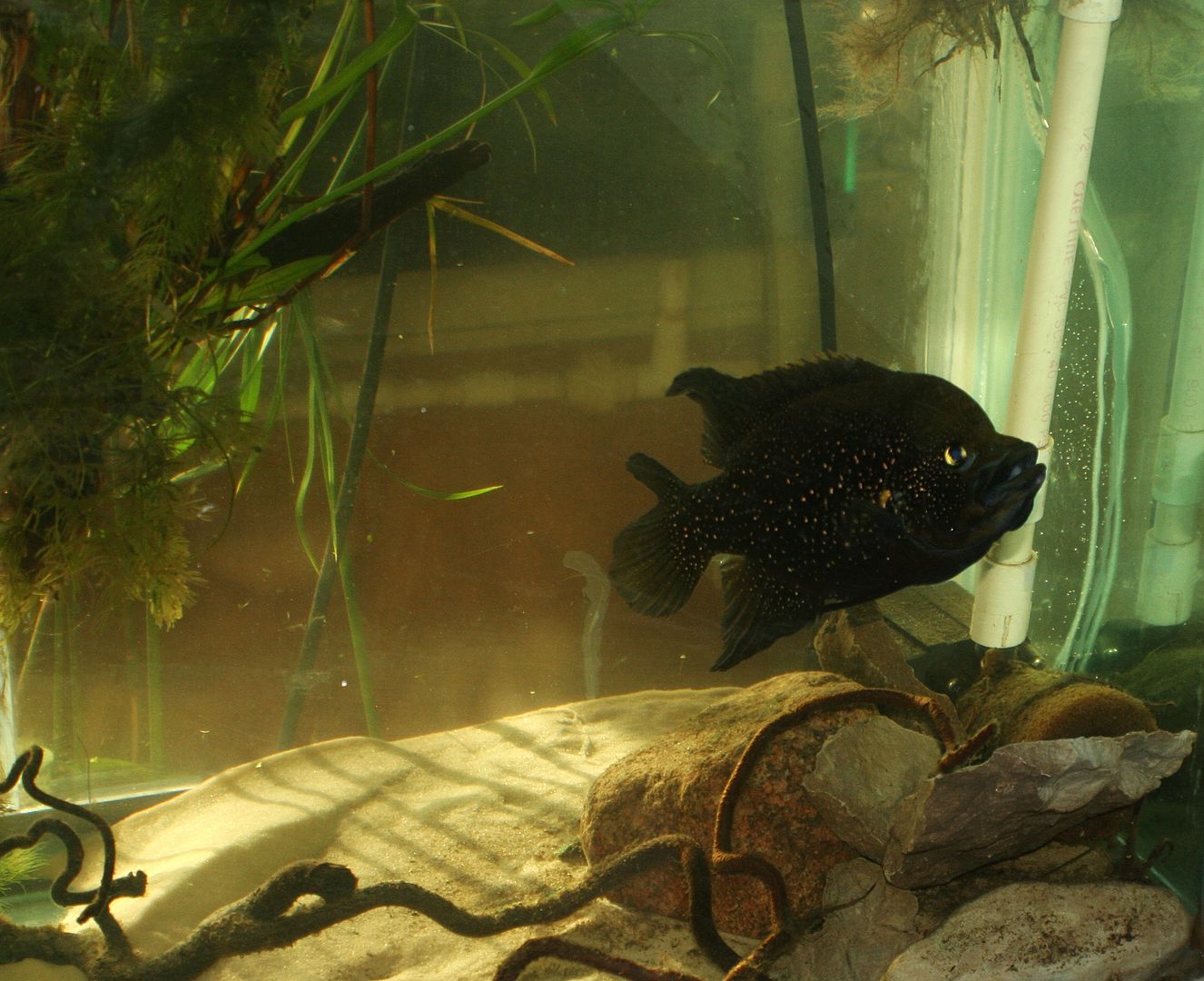
I have redone tanks that also have now been up years. That's why I add extra panes of glass, it's almost like fortifying the frame. I used a pane on both sides here, because the back was cracked.


The tank is filled, and working well today.
Use a razor to clean out old silicone just enough so a new pane can be laid down tightly, get some GE1 silicone, and use a caulking gun to reseal, lay the extra pane down, and seal over that.
I have redone tanks that also have now been up years. That's why I add extra panes of glass, it's almost like fortifying the frame. I used a pane on both sides here, because the back was cracked.


The tank is filled, and working well today.

But Duanes I cannot reach down into the tank to carry out the repair steps with it sitting on top of the stand...
I thought you meant move it somewhere else, sorry. Yes definitely to the floor, where you have room to work. I take a razor blade and remove silicone flush to the glass. I also remove as far as the area of the size of the new pane I'm adding.
Joey's videos are the perfect way to get up to speed, I started drilling tanks after watching his video on drilling.
Joey's videos are the perfect way to get up to speed, I started drilling tanks after watching his video on drilling.
Yeah,it's sounding like moving the tank back and forth will be the hardest part of this operation.The removal and applying of the silicone should be a piece of cake....I have been hearing about Joey's YouTube vids and what better way for me to be introduced to them...


I've done a bunch, some are easier to strip than others, not sure why, maybe age/type of silicone.
My advice:
Buy one of those plastic holders and a box of razor blades.
Clean the tank well with vinegar prior to starting, especially around the seams. Any mineral residue or grit will dull your blade and abrade the glass.
Toss the old blade after every seam and use a new one. You will spend a couple extra bucks, but it's worth it.
Be sure not to leave any film of old silicone because the new stuff won't stick to old silicone. Make sure you have good lighting so you can see any residue.
Don't use hardware store caulking. Not only is a good RTV silicone stronger, it also spreads nicer and cures clearer. I can't remember the exact kind I used (I ordered it from Grainger for about $8/tube), but there are several threads on the "best" brand of silicone.
Do the best you can sealing around the top trim, especially in the corners - it is really annoying to get a slow drip from condensation/splashing making its way through the trim.
My advice:
Buy one of those plastic holders and a box of razor blades.
Clean the tank well with vinegar prior to starting, especially around the seams. Any mineral residue or grit will dull your blade and abrade the glass.
Toss the old blade after every seam and use a new one. You will spend a couple extra bucks, but it's worth it.
Be sure not to leave any film of old silicone because the new stuff won't stick to old silicone. Make sure you have good lighting so you can see any residue.
Don't use hardware store caulking. Not only is a good RTV silicone stronger, it also spreads nicer and cures clearer. I can't remember the exact kind I used (I ordered it from Grainger for about $8/tube), but there are several threads on the "best" brand of silicone.
Do the best you can sealing around the top trim, especially in the corners - it is really annoying to get a slow drip from condensation/splashing making its way through the trim.
