Please help me my fishes act strange and may die.

  • We are currently upgrading MFK. thanks! -neo
If you are medicating the fish, there is no need to raise it to 86F. You can keep it at the normal temp above 75F. You only need to raise it to 86F if you are doing the salt dosing of 3ppt.

Medication does not kill any ich on the fish. It only kills ich swimming up to the fish after hatching from the substrate.
If the medication doesn't kill the ich, then the ich on the fish would kill it still? How would that be solved?
 
If the medication doesn't kill the ich, then the ich on the fish would kill it still? How would that be solved?
The fish can still fight off the ich. The medicine prevents its return. Part of ich life cycle is falling off the fish to multiply. As long as the fish isn’t compromised, it will be fine.
 
You can change water during medicating if it is necessary. The trick is to know what percent of the water you are removing. Then what you will do is to that % of the med dose to the changing water. So if you dosed 1 gm of a dry med and changed 50% of the water, you would need to add back 1/2 gram of the med. Then you continue with the dosing instructions as if you had done no water change. I do this all the time with no ill effects. Also, trhe warmer the wayerm the faster the ich life cycle works, Since most meds do not work to kill ich in all of the stages, getting to the stage(s) where it does work happens faster the warmer the water. Rasing the temp speeds the treatment.

There are more medications for treating ich than any of us ever imagined. Some work great some do not works at all. And then there is in which stage of the Ich life cycle they will work as well as what fish are involved. Everybody has their own ideas. I have mostly used the malachie green/formaldehyde baased meds. But they can be rough on fish like tetras or clown loaches. Using this type of med with them may either require lower dose or a different ingredients entirely. My fallback med is flubendazole. It is a pretty benigh med in terms of fish reaction.

So I will offer the curious the following paper:

PICÓN-CAMACHO, S., MARCOS-LOPEZ, M., BRON, J., & SHINN, A. (2012). An assessment of the use of drug and non-drug interventions in the treatment of Ichthyophthirius multifiliis Fouquet, 1876, a protozoan parasite of freshwater fish. Parasitology, 139(2), 149-190. doi:10.1017/S0031182011001867

Summary

Infection by the ciliate protozoan Ichthyophthirius multifiliis Fouquet, 1876 causes significant economic losses in freshwater aquaculture worldwide. Following the ban on the use of malachite green for treating food fish, there has been extensive research aimed at identifying suitable replacements. In this paper we critically assess drug and non-drug interventions, which have been tested for use or have been employed against this parasite and evaluate possibilities for their application in farm systems. Current treatments include the administration of formaldehyde, sodium chloride (salt), copper sulphate and potassium permanganate. However, purportedly more environmentally friendly drugs such as humic acid, potassium ferrate (VI), bronopol and the peracetic acid-based products have recently been tested and represent promising alternatives. Further investigation, is required to optimize the treatments and to establish precise protocols in order to minimize the quantity of drug employed whilst ensuring the most efficacious performance. At the same time, there needs to be a greater emphasis placed on the non-drug aspects of management strategies, including the use of non-chemical interventions focusing on the removal of free-swimming stages and tomocysts of I. multifiliis from farm culture systems. Use of such strategies provides the hope of more environmentally friendly alternatives for the control of I. multifiliis infections.

from http://dspace.stir.ac.uk/bitstream/...macho et al Parasitology Ich chemo review.pdf

Table 1 in the above study covers the chemical treatments for ich. It gives dosage, method of administration and how effective or inneffective it was in what stage of Ich development. table 2 covers different Management Strategies.
 
Thank you very much everyone.
In Denmark, there is no chlorine or any additive in the water. it is clear fresh water better than those bottled waters for that are sold in stores. I am using water from tab directly to the tank, of course i change the temp of the water before pouring it to the tank.

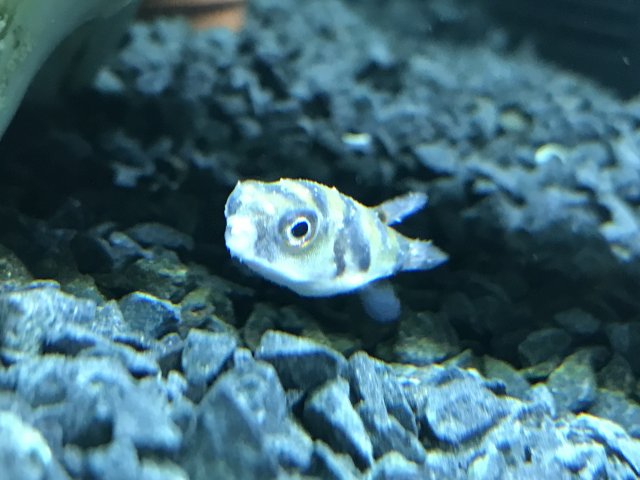
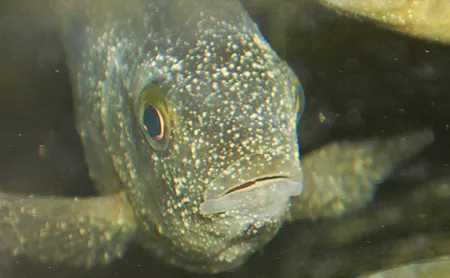
Status as of now, I gave the fishes some live blood worms, they ate it but not with enthusiastic apatite. All my other fishes are generally coping well with the ich. The ones that struggle a lot and are in the verge of dead are my Amazon Pufferfishes. The ich covered all of their body including their eyes. they keep smashing themselves in the gravel and stone and everything. I feel so sad to watch them scratch themselves and I cannot do anything about it. sometimes, I just want to pour more medicine for them, but I am afraid that If I overdose, the med will kill them. I do know why this ich not getting affected by anything. I used eSHA 202 Copper Sulphate, and then removed it. did not work, now today is the second day of using the eSHA Exit which is Ethacridine lactate Malachite green Methylene blue but I see no sign of improvement. also there is 246gram of slat in the water (is this salt going to kill my plants?). the temp is 79F. the Puffers are constantly rubbing themselves. I searched almost every pet shop in the city, and none of them have any definite cure. one of them says salt, the other says eSHA 202, another says eSHa exit, another says another product. I am so confused. Can I increase the dose on eSHA Exit (Ethacridine lactate Malachite green Methylene blue) by doubling it? it seems like the recommended dose does not do anything.

here are the latest picture, I took them just now :(

IMG_4613.jpgIMG_4612.jpgIMG_4609.jpg
 
Last edited:
  • Like
Reactions: Deadeye
Ick is not cured in a day, in 2 days or maybe not even in 5.
It takes time..... sometimes weeks.
All the ick protozoa need to run their life cycle, and can only be killed in a couple of the larval stages.
This. ?

This is why they recommend increasing the temperature of the water it speeds up the ich life cycle. If the meds you are using only affects the ich during a certain part of it's life then better to have it going through it's life faster to reduce the time meds are in use. Higher temps affect the fish too. It can speed up metabolism therefore increasing appetite and waste production. Some fish can't handle high temps well. So it can be stressful on the fish.
I like to quarantine my fish and observe them for two to three weeks before adding them to an existing population. If nothing has gone wrong in that time I introduce them. I've been burned by different suppliers of fish even ones I know qt them first. I brought fish home from an lfs I trust and I know they qt their fish I work there, but these didn't get qt'd for whatever reason and I hadn't worked for quite some time. No signs of anything I didn't qt, I put them in the main tank and 2 days later ich. I slowly over a week increased the temp from 78 to 88 and started meds. 2 weeks later ich was gone. I continued meds and temp for about a week more and slowly retuned temp to normal. Didn't loose any fish luckily. Not something you want to deal with.....and I know better.
 
You have to be careful with raising water temperatures. Most fish can handle cooler temperatures better than they can handle hotter temperatures.
I agree,
at higher temps, many pathogenic bacteria become extra virulent, and the lesions(holes) left where new ick have hatched out (where the spots were), easily become secondary opportunistic infection sites, for diseases that can be much harder to treat, than ick.
The fish below, riddled with ick, was able to be cured without raising temp, and using only rock salt, at 3.5 ppt (3lbs per 100 gallons).
1622725162277.png
Below, a little over a week later using only salt, and without raising temp.
1622725228337.png
 
Thanks everyone.

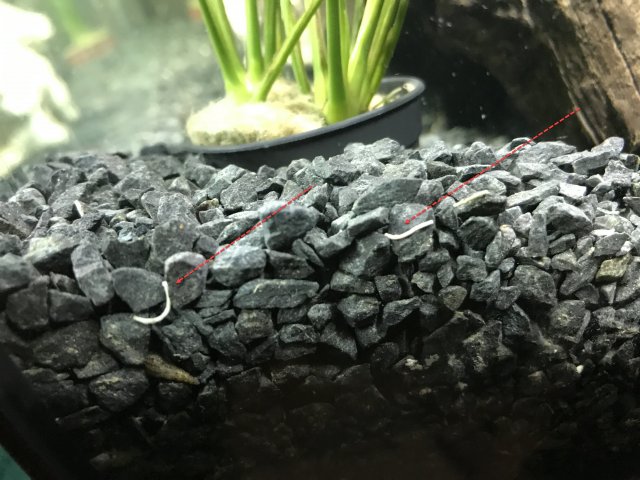
Since, I introduced the medication. I see these rod-shaped white things in the picture below. there are many of them. I do not what are these. are these fish poops turned white? are these dead body of the ich parasite? can you please tell me what are these?

IMG_4625.jpg
 
Looks like detritus worms or bloodworms that had the juice sucked out of them at first glance.
 
  • Like
Reactions: professorjimjam
MonsterFishKeepers.com