

So a follow up on this topic, what filtration do you recommend or like the best. I understand you are advocating for frequent filter cleanings and water changes. I have a fishroom with mainly only hydro-sponge filters and a few matten-filters. I try not to stock heavily, but there are always problems. It is a trade off between cost vs effectiveness I think. So on that note, what type of filtration for home systems (average 20 gallon ,40 breeder, 75 gallon) do you recommend. And realize, we always over-stock... it is just the fish collectors way. Thanks
Basic Aquarium Filtration misunderstanding
- Thread starter duanes
- Start date
You are using an out of date browser. It may not display this or other websites correctly.
You should upgrade or use an alternative browser.
You should upgrade or use an alternative browser.

I am not recommending any one type over another, because basically, they all do the same thing.
Cleaning them often, is more important in my eyes than the type.
I do think being user friendly is also very important.
If its difficult or time consuming to clean, it will not be done.
I like sponges because they can be cleaned often, with little effort.
I also like HOBs because the mechanical media can be cleaned in a few minutes without turning them off, although as I said in my first post, if there is a 10" oscar in a 75 gal tank, and they are the type, the entire back of the tank should be a lined with HOBs, (maybe the sides too) and at least one (if not more)should be cleaned "daily".
But in my fishroom, I preferred sumps with filter socks as mechanical, and bio-fractionation for chemical and biofiltration. Fractionators need a lot of constant tinkering, and because I had 1000 gallons in tanks, and also that much more in ponds, the bio tubes were 4ft tall and 8" in diameter, so not recommended for the average aquarist.

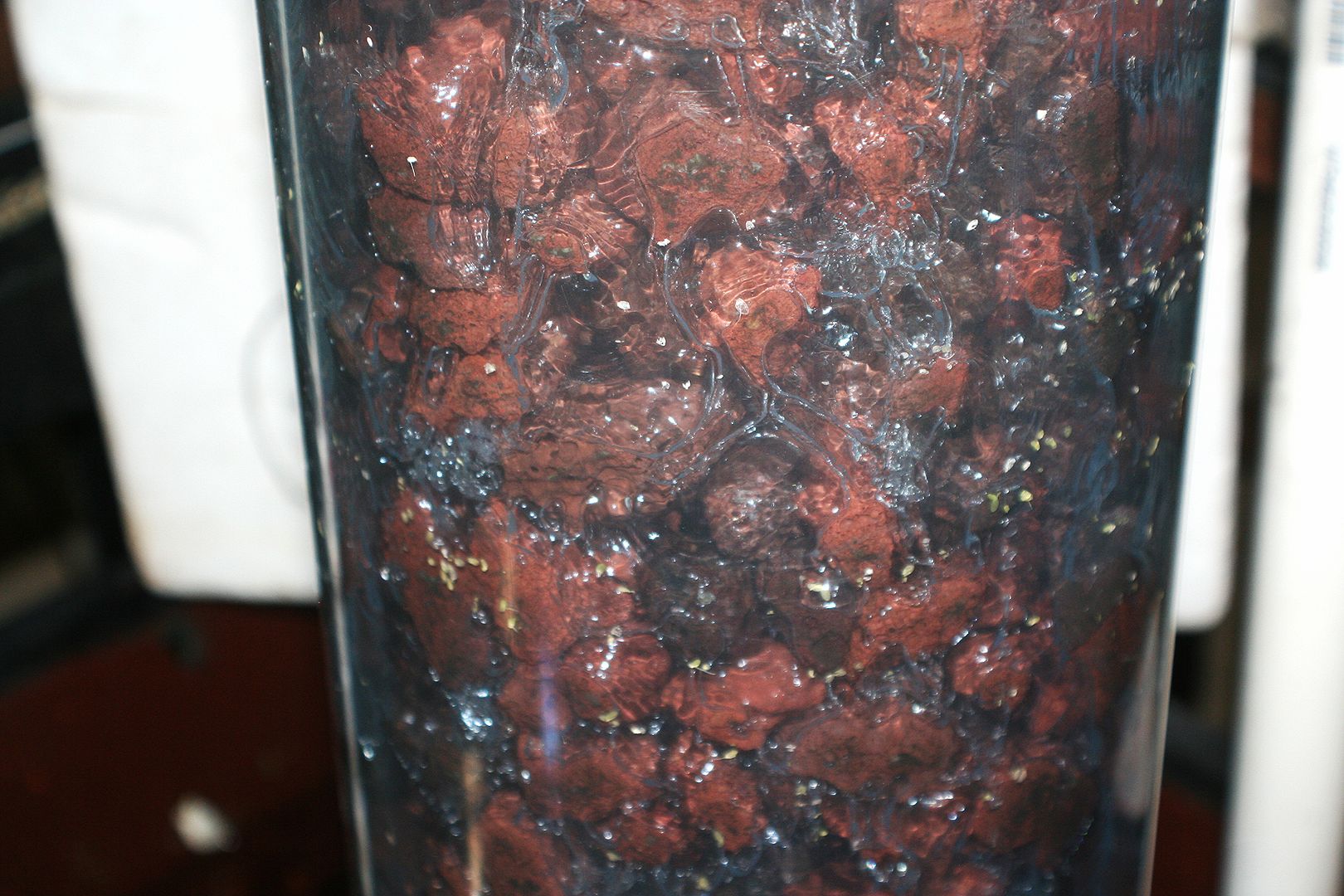
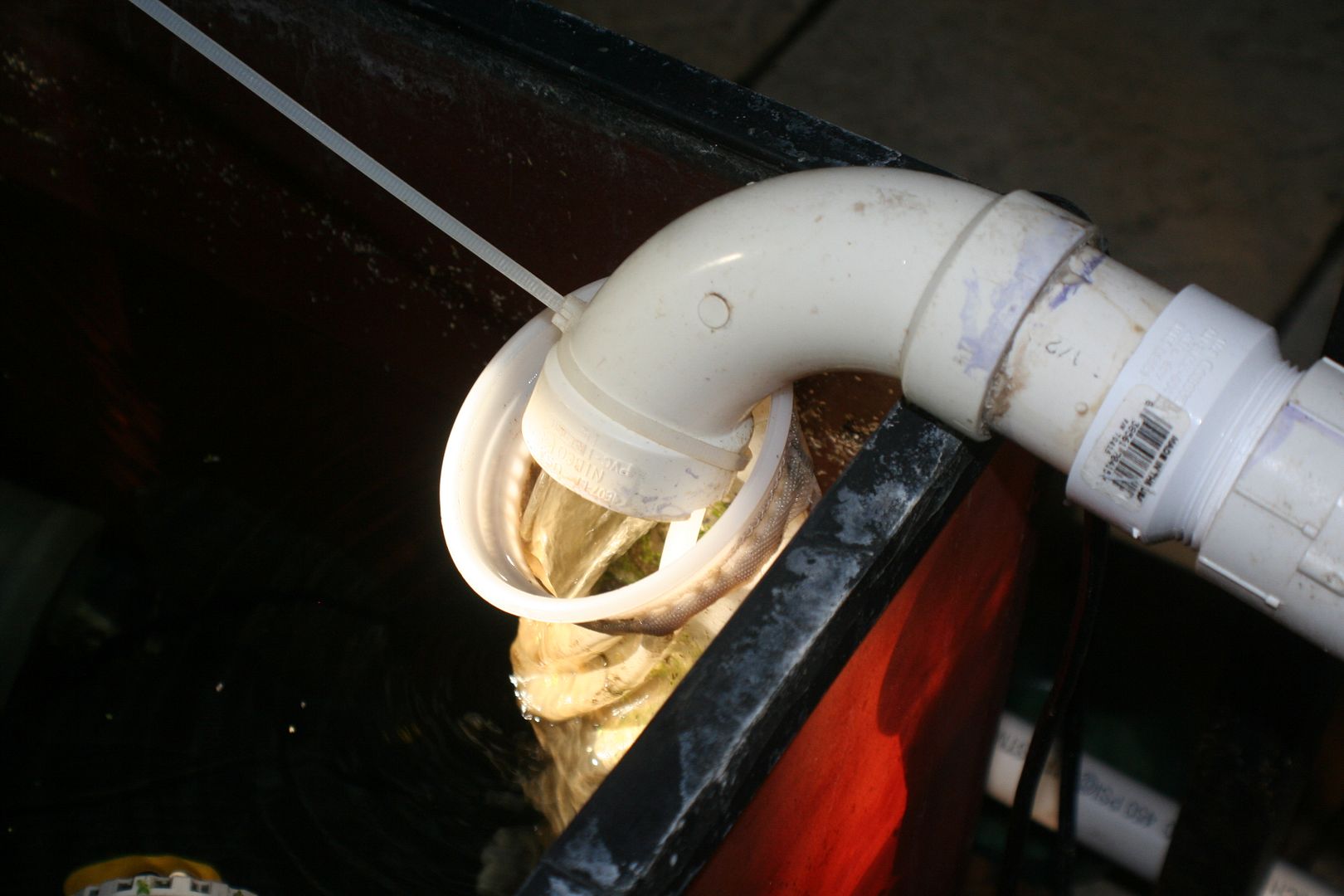
below is waste pulled out of the water column, by a bio-fractionator

Cleaning them often, is more important in my eyes than the type.
I do think being user friendly is also very important.
If its difficult or time consuming to clean, it will not be done.
I like sponges because they can be cleaned often, with little effort.
I also like HOBs because the mechanical media can be cleaned in a few minutes without turning them off, although as I said in my first post, if there is a 10" oscar in a 75 gal tank, and they are the type, the entire back of the tank should be a lined with HOBs, (maybe the sides too) and at least one (if not more)should be cleaned "daily".
But in my fishroom, I preferred sumps with filter socks as mechanical, and bio-fractionation for chemical and biofiltration. Fractionators need a lot of constant tinkering, and because I had 1000 gallons in tanks, and also that much more in ponds, the bio tubes were 4ft tall and 8" in diameter, so not recommended for the average aquarist.


below is waste pulled out of the water column, by a bio-fractionator


The most common misuse of filters is to store waste in ,and not remove waste away, from the system. The right way to manage a filter is to clean the media frequently to optimize growth of beneficial (nitrifying) bacteria, rather than to promote growth of non-beneificial (heterotrophic) bacteria that compete with fish and beneficial bacteria for oxygen.
Unless you grow plant, WC is the easiest and sure way to remove nitrate in a freshwater tank. In salt water, many aquairists use the Berlin live sand/rock system to complete the nitrogen cycle with denitrification. Most wastewater treatment plants just dump nitrate rich water into our waterway that feed algae. Advanced sewage treatment plants employ tertiary treatment that convert nitrate to nitrogen by anaerobic denitrification process.
Not entirely true. Tertiary treatment is more often used to reclaim the effluent as a means of supplimenting or reducing potable water use. De-nitrifation should be a normal part of proper waste water treatment prior to tertiary treatment.
Nitrate reduction and removal more often then not requires a completely separate process often involving chemical intervention. Detirification can happen with proper aeration (DO concentration) and then an appropriate period of nonaeration. Many factors are involved in the removal of nitrates and many of those factors are economical, meaning, most municipalities won't incur the cost associated with nitrate removal. The only treatment of nitrates I recall that is reliably effective was settling and reed ponds. Algae is not necessarily a bad thing, unless it depletes oxygen endangering wild life. I don't recall any treatment facilities discharging to any recieving waters other than the ocean outfall. Maybe in the midwest and landlocked states....

Howdy,
Nice write-up, and good discussion. Except, I'm not a fan of your choice of words when it comes to calling filter effluent "chemicals". Everything is a chemical. H2O is. I understand the dramatic impact that you are trying to achieve, though. I, however, look at it as free fertilizers/plant nutrients.
As with many things in life, many approaches to filtration work.
I personally believe in long filter cleaning intervals. I want my filters to be maximized as biofilters, and I choose them big enough to do so. I clean my 2262s about once a year. I rinse out sponges when they crumble up from the suction of the powerhead because they are clogged.
In turn, I have planted tanks and a drip system that washes out surplus the nitrates and other "chemicals" ;-)
As such, I believe to have achieved a close resemblance to mother nature's work in a pond: Food falls into the water, fish eat it and pollute the water, waste gets biodegraded in my filters into plant nutrients, my plants take up some of it, and the rest gets washed out by the slow flow-through.
Just my $0.02 to add another point of view to the discussion.
HarleyK
Nice write-up, and good discussion. Except, I'm not a fan of your choice of words when it comes to calling filter effluent "chemicals". Everything is a chemical. H2O is. I understand the dramatic impact that you are trying to achieve, though. I, however, look at it as free fertilizers/plant nutrients.
As with many things in life, many approaches to filtration work.
I personally believe in long filter cleaning intervals. I want my filters to be maximized as biofilters, and I choose them big enough to do so. I clean my 2262s about once a year. I rinse out sponges when they crumble up from the suction of the powerhead because they are clogged.
In turn, I have planted tanks and a drip system that washes out surplus the nitrates and other "chemicals" ;-)
As such, I believe to have achieved a close resemblance to mother nature's work in a pond: Food falls into the water, fish eat it and pollute the water, waste gets biodegraded in my filters into plant nutrients, my plants take up some of it, and the rest gets washed out by the slow flow-through.
Just my $0.02 to add another point of view to the discussion.
HarleyK
Yes the core of the problem is mistaking "clear" for "clean". There are no "clear" lakes where you can see the bottom. The water is filled with algae which does the filtering, and blocks the view. But the water is "clean".
Actually, there are. I enjoyed scuba diving in Crystal Lake, Wisconsin. It lives up to its name. Great visibility, even around 30ft depth. Clean (a in: no industrial pollution) and also clear.. There are no "clear" lakes where you can see the bottom
There are no "clear" lakes
Hello; Another place where I have seen decepitively clear water in is cave systems.

Blue water offshore salt water has 300 ft plus clear water.
Most 10,000ft alpine trout lakes in the rocky mountains have 100 ft plus clarity and the water is drinkable.
Most 10,000ft alpine trout lakes in the rocky mountains have 100 ft plus clarity and the water is drinkable.
I agree there are crystal clear areas, but they are no more hospitable for fish than the none clear ones. Some of the cenotes in Mexico can at times have seemingly unlimited visibility, because the water gets extra "mechanical/; filtration thru the limestone of the Yucatan.
though some of the cenotes can by quite turbid,and be teaming with life
Lake Michigan is becoming clearer and clearer because of the invasive zebra, and quagga mussels, but for many fish, this is making the lake less livable.

