


 btw caved today and gave him a king prawn from my Chinese take out. we'll see what happens, i just need to refrain from adding fish now, not that i often come across any large enough at my lfs lol... hopefully the other fish will be maxing out size wise as the black devils growing... if i can get the midevil, butti and male festae up too around 15 inch before he is 2ft they may have a good chance, that's assuming none of them spaz out and attempt a killing spree. i really believe the only thing keeping the devil in check is rocky the midas/midevil. rocky hates him in every sense of the word and quickly sends him back to his cave when his lights off marauding commences lol. worried about my suncat as he is a favourite, sloooow growers, a long road for him to hit 19 inches lol!
project black devil cat in a 300g community!
- Thread starter justarn
- Start date
You are using an out of date browser. It may not display this or other websites correctly.
You should upgrade or use an alternative browser.
You should upgrade or use an alternative browser.

King prawn from your Chinese take-out? I hope it was only boiled. No oil or butter, no sauce, no seasoning, no salt, no spices, herbs, etc. as these are no-nos. Don't mean to preach, only trying to be helpful just in case.
Has rocky and the catfish fought again since you posted the damage photos? Or the wyckii retreats right away every time?
Has rocky and the catfish fought again since you posted the damage photos? Or the wyckii retreats right away every time?
No more fights that i have seen and no more damage to any fish for a while, as soon as rocky sees him out he puts him back with a few gill flares... as you see from the pics and the video the devils easily scratched blackness is near perfect too so rocky hasnt bit him either. And it was boiled and i rinsed it btw, few beers and im a nightmare. im guessing cooked poultry is bad too?
There are two sides to this issue. I'm firmly on one side. I've never given any of my fish any flesh of non-aquatic origin. No mammal, no avian, etc. Once in a while it is probably ok but never as a significant portion of the diet. Amphibian, reptilian - yes sometimes.
One cannot rinse off what was absorbed into and penetrated the entire flesh. It can be soaked out and even then not completely.
One cannot rinse off what was absorbed into and penetrated the entire flesh. It can be soaked out and even then not completely.


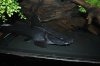
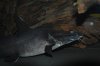


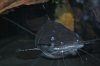

Looks great indeed. Can you put numbers on the growth, please?
Surely, they are opportunistic and will try to eat anything edible. It's a tough life out there in the wild. Survival of the fittest. Are there are exceptions? Of course. Some fish live by the slaughter houses and other food processing plants, some by the waterside restaurants and feed on scraps or what owners throw in to keep them around for the arousal of the customers, others by old cemeteries that are being washed out into the rivers, yet others by places where people dump their refuse, villages or cities, for which vulture catfish are renown...
I've never looked specifically but never seen a study on how such a differing diet affects the fish's health. I know Spaniards dump A LOT of food in Ebro river to feed the Wels to upkeep the fishing tourism business. I wonder if they study the effects of their activity.
I have seen the studies, e.g., cited in RD's articles (a prominent MFK-er), on fish that died in captivity (Public Aquaria) of more or less "natural causes" and that many of not most of them died from what is called a fatty liver disease because they were fed inappropriate diets of e.g., goldfish (too fatty for tropical predators, marine and f/w) or even non-aquatic foods derived from warm-blooded animals, whose fat turns solid at the water/fish-body temps.
I'd think that for the vast majority of predatory monster cats, the diet is 95%-99% of aquatic origin - fish and eggs, crustaceans, shellfish, insects and their larvae, etc., not counting aquatic mammals, e.g., water rats, otter pups, an occasional ferret, etc., and diving birds, e.g., cormorants and Co, as well as dead animals and birds. That's what I try to mimic.understand what your saying but wouldnt most monster catfish take small rodents and young water birds in the wild?
Surely, they are opportunistic and will try to eat anything edible. It's a tough life out there in the wild. Survival of the fittest. Are there are exceptions? Of course. Some fish live by the slaughter houses and other food processing plants, some by the waterside restaurants and feed on scraps or what owners throw in to keep them around for the arousal of the customers, others by old cemeteries that are being washed out into the rivers, yet others by places where people dump their refuse, villages or cities, for which vulture catfish are renown...
I've never looked specifically but never seen a study on how such a differing diet affects the fish's health. I know Spaniards dump A LOT of food in Ebro river to feed the Wels to upkeep the fishing tourism business. I wonder if they study the effects of their activity.
I have seen the studies, e.g., cited in RD's articles (a prominent MFK-er), on fish that died in captivity (Public Aquaria) of more or less "natural causes" and that many of not most of them died from what is called a fatty liver disease because they were fed inappropriate diets of e.g., goldfish (too fatty for tropical predators, marine and f/w) or even non-aquatic foods derived from warm-blooded animals, whose fat turns solid at the water/fish-body temps.
