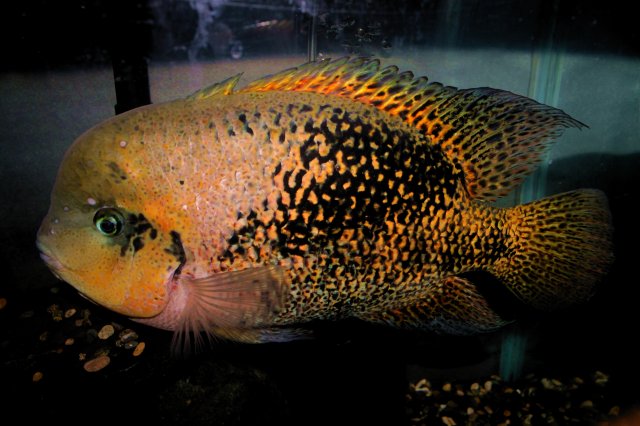
Red Head Cichlid (Paraneetroplus synspilus)

  • We are currently upgrading MFK. thanks! -neo
When you stop to consider that all the Vieja are very close cousins and probably all evolved from a single ancestral group, its not that surprising.
When that basal ancestral group became separated by changing geography (earthquakes, volcanic eruptions, separating water systems and rivers etc) creating slightly different environments over millennia, differing traits were bound to emerge.
Maybe the overbite that hartwegii sports made it better suited to feed in its environment , and color which coincided with plants or other topography made the bifasciatum extra blotch more of a successful piece of camouflage.
 
In my experience bifasciatus are a bit more aggressive to similar looking cichlids, get around 14 inch full grown. Not mine a 10 year old pair.
Vieja bifasciata Rio Candelaria:
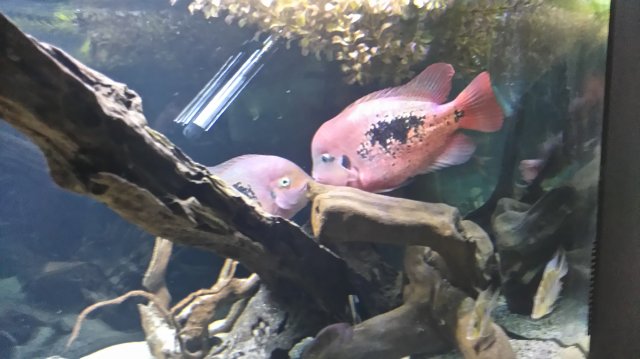
This is mine

DSC_0469.JPG

DSC_0408.JPG
 
In my experience bifasciatus are a bit more aggressive to similar looking cichlids, get around 14 inch full grown. Not mine a 10 year old pair.
Vieja bifasciata Rio Candelaria:
This is mine
 
I guess thats my main question now, cause Im always up for learning about cichlids :)

What is the differences between the melanura and bifasciata?
 
I can definitely tell they are very closely related because Im having a hard time identifying the differences between them.

Oh wow those are some nice fish you have there dan! I believe Ive stumbled across your youtube video before on one of my cichlid watching sprees!
 
I can definitely tell they are very closely related because Im having a hard time identifying the differences between them.

Oh wow those are some nice fish you have there dan! I believe Ive stumbled across your youtube video before on one of my cichlid watching sprees!
Thanks,
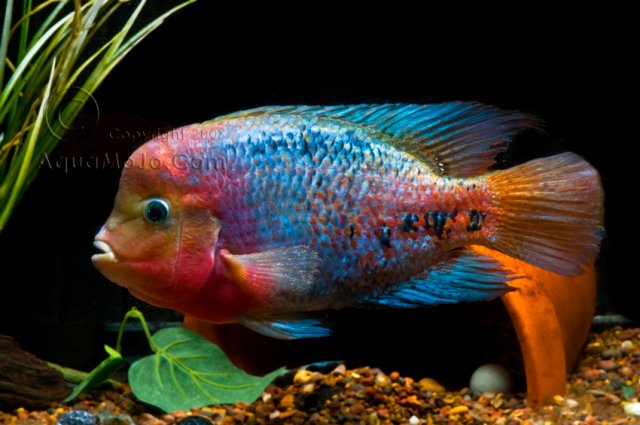
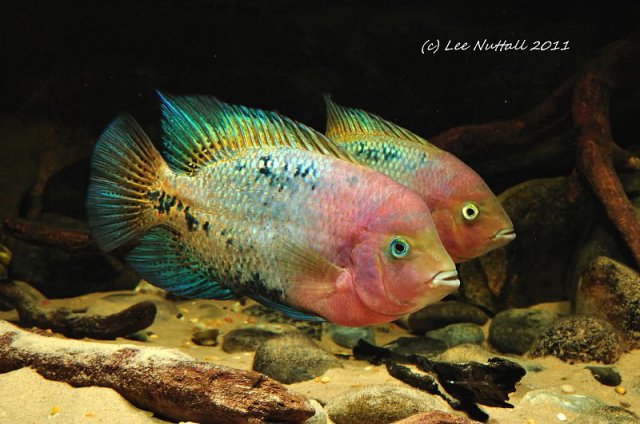
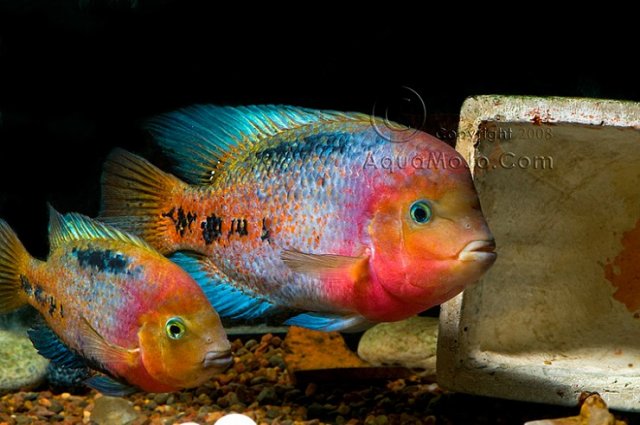
A few pics of melanura / synspilum and bifasciatus, agree with duanes there both very closely related as are all the Paratheraps, vieja sp
The first three are melanura the next are bifasciatus

Synspilum-403b.jpg

DSC_4588l-1.jpg

vieja_synspilum_9cm5.jpg

images.jpg

bifasciatus_2.jpg

img_59_09e7d4a032.jpg
 
When you stop to consider that all the Vieja are very close cousins and probably all evolved from a single ancestral group, its not that surprising.
When that basal ancestral group became separated by changing geography (earthquakes, volcanic eruptions, separating water systems and rivers etc) creating slightly different environments over millennia, differing traits were bound to emerge.
Maybe the overbite that hartwegii sports made it better suited to feed in its environment , and color which coincided with plants or other topography made the bifasciatum extra blotch more of a successful piece of camouflage.
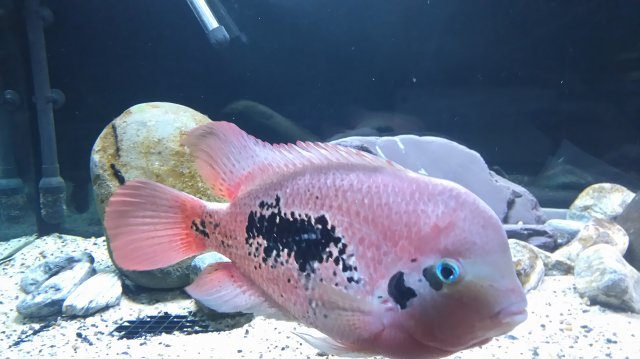
 
Blotch and lateral line I mean....

How about the face freckling? Is that a trait shared by both the melanura/synspilum and bifasciatus, or is the trait specific to the bifasciatus?
 
Seeing as you said you took out the largest ones I would say female. As the males usually grow larger quicker than the females will.
 
MonsterFishKeepers.com